The Siege of Ninety Six
22 May – 19 June 1781 · Ninety Six, South Carolina
At a Glance
- When: 22 May – 19 June 1781, twenty-eight days
- Where: the fortified village of Ninety Six, the British post at the head of the old Ninety Six District, which included today’s Laurens County
- Americans: Maj. Gen. Nathanael Greene, about 1,500 men; his engineer was Col. Thaddeus Kosciuszko
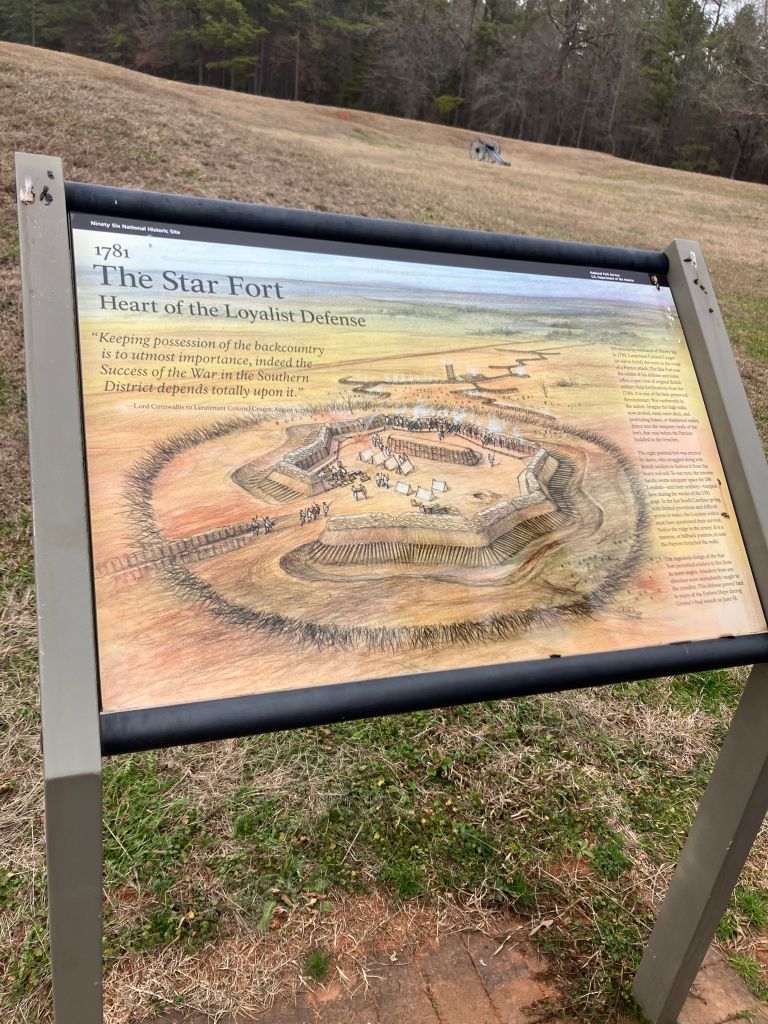
- British: Lt. Col. John Harris Cruger, about 550 Loyalists, with the earthen Star Fort as the key to the defense
- Losses (American Battlefield Trust): Americans 57 killed, 70 wounded, 20 missing or captured; British 27 killed, 58 wounded
- Result: Greene’s assault on 18 June failed, and with Lord Rawdon’s relief column close, he lifted the siege on 19 June. The British abandoned Ninety Six soon afterward.
- Laurens connection: Little River men served in the siege, and others were held in the Ninety Six jail; see Little River Men at Ninety Six.
On This Page
- The Siege
- Little River Men at Ninety Six
- Durant Ashmore’s Sketch
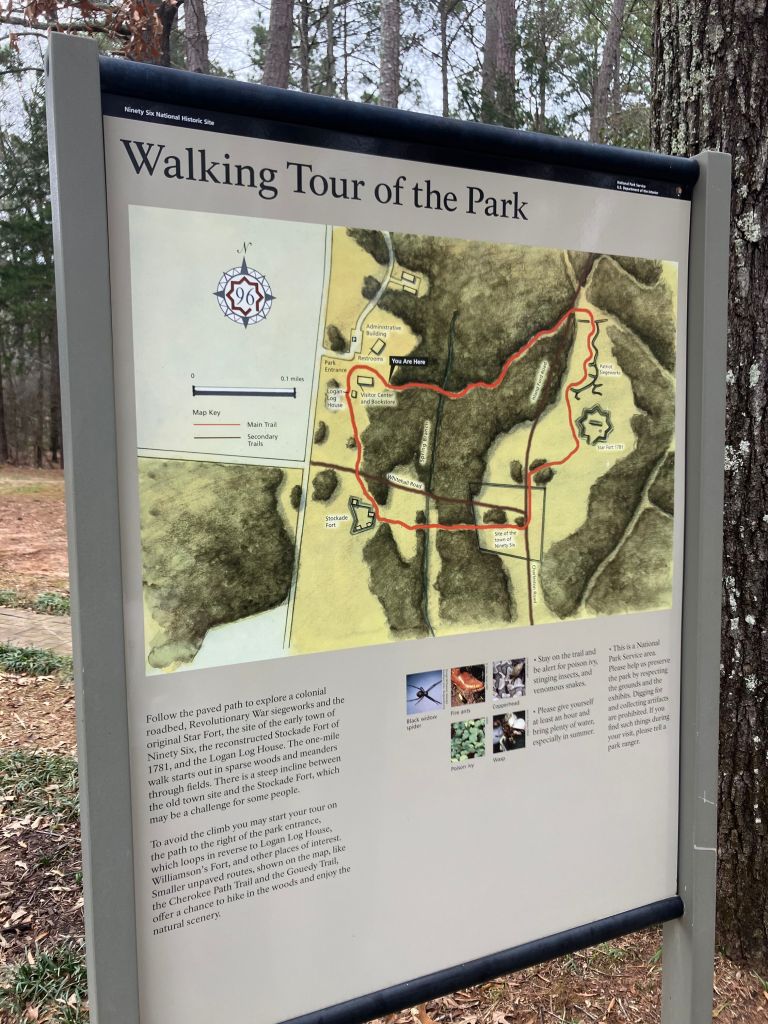
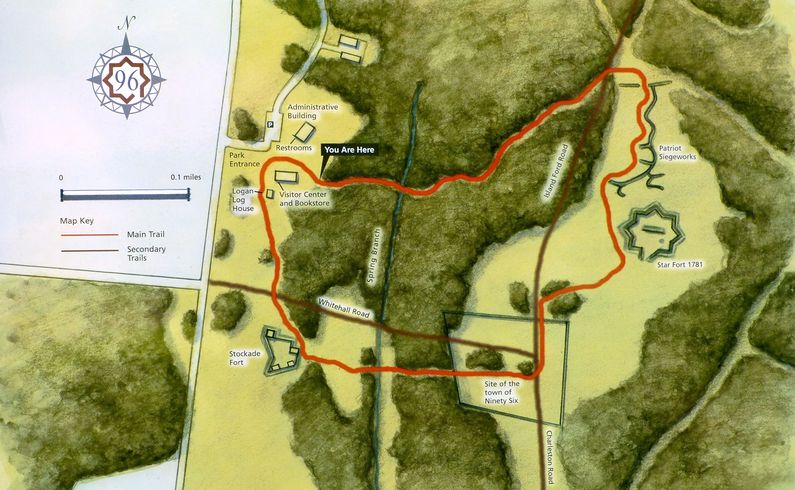
- Visiting the Park
- Resources and Sources
The Siege
By the spring of 1781 Ninety Six was the last major British post in the South Carolina backcountry. Gen. Nathanael Greene arrived on 22 May with about 1,500 men and found the village held by about 550 Loyalists under Lt. Col. John Harris Cruger. The key to the defense was the Star Fort, an earthwork ringed by a ditch and abatis. Greene’s engineer, Col. Thaddeus Kosciuszko, began siege works against it, and the Americans raised a Maham tower so their riflemen could fire down into the fort.
On 11 June Greene learned that Lord Rawdon was marching from Charleston with nearly 2,000 men to relieve the post. With time running out, he ordered an assault on 18 June. The attackers were driven back by a Loyalist counterattack. With Rawdon only about thirty miles away, Greene lifted the siege on 19 June and fell back toward the High Hills of the Santee. He lost the siege, but the British could not hold Ninety Six, and the garrison soon left for Charleston.
Today the site is Ninety Six National Historic Site, a National Historic Landmark run by the National Park Service. Many of the Loyalists who left with the garrison were later resettled by the Crown in Nova Scotia, where they named their new township Rawdon after the commander who had come to their rescue.
Little River Men at Ninety Six
Ninety Six was the British post over the whole district that included today’s Laurens County, and its jail held Patriot prisoners from the Little River Regiment. James Thurston lost his sight to smallpox there, and William Daugherty was held there in 1780.
Pension statements place these men of the Honor Roll at the siege in 1781:
- James Dillard
- Thomas Entrekin, who remembered that his company “was marched to join Genl. Green at Ninety Six,” staying until it was sent to guard the frontier under Col. Joseph Hayes
- David Anderson, who joined Greene after Charleston fell and later rode in his life guard
- Andrew Burnsides, “in actual service from the Siege of Ninety Six to Hayes defeat”
- Robert McNeese
- Lewis Saxon, later captured at Hayes Station
- Robert Templeton
After the siege the British garrison abandoned Ninety Six for Charleston. Rawdon’s last sally from the post reached only as far as Duncan Creek before turning back (see the Laurens County Rev War Timeline).
The 1781 siege was not the first fight here. Early in the war, Loyalists under the Cunninghams attacked Patriots under Andrew Williamson at Ninety Six, and Robert Long left a memo about it.
Durant Ashmore’s Sketch

Sketch from the Durant Ashmore Map Collection
Visiting the Park



Resources
Sources
- American Battlefield Trust, “Ninety Six” (dates, strengths and losses).
- National Park Service, Ninety Six National Historic Site: Lt. Colonel John Harris Cruger and Leaders of the Siege.
- Pension statements quoted on the Little River Regiment Honor Roll, and the Laurens County Rev War Timeline.
Related pages: The Little River Regiment · Honor Roll · Hayes Station · Robert Long · Laurens County Rev War Timeline · Rev War Sites of Laurens County