The Leonetti Family
From Santa Maria La Castagna, Calabria, to Chicago
Luigi Leonetti was born on 24 March 1865 in the hamlet of Santa Maria La Castagna, in the commune of Montalto Uffugo, province of Cosenza, Calabria. His father was a foundling, left at the foundling wheel in Cosenza in 1832. His mother’s family, the La Torres and Calominos, had lived in Castagna for generations. Luigi came to the United States about 1880 and settled in Chicago, where he was known as Louis. He was a political worker in Alderman John Powers’s Nineteenth Ward, a constable, and later a municipal court bailiff and deputy sheriff. He lived through the political bombings of the ward and received Black Hand extortion letters. He married Petrina Filippone, a Sicilian from Petralia Sottana. They were my great-grandparents. Their daughter Camille married Frank Patrick, son of Paraska Hawryluk (see Hawryluk Family); they were my grandparents.
At a Glance
- Luigi (Louis) Leonetti: born 24 March 1865, registered 25 March, baptized 26 March at Santa Maria della Neve (Madonna della Neve), Santa Maria La Castagna, Montalto Uffugo, Cosenza, Calabria. Died 2 September 1941, Chicago; buried at Mount Carmel Cemetery, Hillside, Illinois
- Parents: Giuseppe Leonessa, known as Saverio Leonetti (a foundling, born in Cosenza in 1832; see below), and Carmela La Torre (born 1837). Married 29 April 1855
- Came to the United States: about 1880
- Wife: Petrina Filippone (about 1878–1958), born in Petralia Sottana, Sicily; came to the United States with her family about 1892 (see below); died October 1958, Berwyn, Illinois
- Children: Rose, Thomas, Monroe, Emil, Camille (my grandmother, later Mrs. Frank Patrick), Edward, Martha, Richard and Josephine Mary (“Marie”). Two more children died young, before 1910
- Work: constable (1897–98); teamster (1899); foreman of a sewer gang (1910); bailiff, Chicago municipal court (1920); deputy sheriff (1941)
- Chicago homes: 367 South Desplaines Street (1897); 165 De Koven Street (before 1909); 702 South Morgan Street (1910); 612 South Morgan Street (1920); 1258 South Fairfield Avenue (about 1925–1941). In 1954 Frank Patrick’s mother lived next door at 1256
On This Page
- Luigi’s Birth Act, 1865
- The Family in Italy
- Saverio, a Foundling
- Carmela’s Family: the La Torres and Calominos
- Petrina’s Family: the Filippones of Petralia Sottana
- Louis in Nineteenth Ward Politics
- Chicago: The Aldermen’s Wars
- The 1920 Bombing
- The Black Hand Letters
- The 1910 and 1930 Censuses
- Photographs
- Learn More
- More Stories
- Sources
- Open Questions
- How You Can Help
Luigi’s Birth Act, 1865

Luigi was born on 24 March 1865 (“yesterday,” says the act), and his birth was reported to the mayor on 25 March by his father, Saverio Leonetti, aged 36, who lived in the contrada (hamlet) of Castagna. The mother was Carmela La Torre, aged 30, his lawful wife, living in the same home. The witnesses were Gaetano Coscarello, aged 42, a laborer, and Vincenzo Bartucci, aged 50. Luigi was baptized on 26 March at the parish church of Santa Maria della Neve (Madonna della Neve) in Santa Maria La Castagna. His 1941 Chicago death certificate also gives 24 March 1865.
The Family in Italy
Fellow researcher Cathy Napolitano found these children of Saverio Leonetti and Carmela La Torre (Raffaela was added in 2026). She believes there are more.
| Born | Name | Notes |
|---|---|---|
| 1857 | Giuseppe | |
| 1861 | Rosaria | |
| 1865 | Luigi | Louis, my great-grandfather |
| 1868 | Francesco | Frank followed Louis to Chicago. He lived for a time in Montana (in 1934 he hosted Louis’s children Edward and Camille there) but came back to Chicago, where he died in April 1954. His death notice names his late brothers Joseph and Louis and his late sister Raffaela. |
| 1876 | Raffaela | Born 2 July, baptized 9 July 1876 at Castagna. She married Joseph Romano and lived in Chicago. |
| 1879 | Gaspare |
Sadly, I think we will come to a permanent dead end on the Leonetti line with Luigi’s father. His birth name may have been Esposito. That means Saverio was an orphan and the Leonetti was added later, probably after his adoption. They married in 1855, so I will look for the marriage act to prove that. On the LaTorre side we should be able to find more.
Cathy Napolitano
Saverio, a Foundling
Update, 2026: Cathy was right. Luigi’s father was a foundling. The records tell his story:
- 16 April 1832, Cosenza. A baby boy wrapped in white swaddling bands was left in the ruota (the foundling wheel) of the Cosenza foundling hospital. The chaplain baptized him that day. The civil registrar recorded him as Giuseppe Leonessa di Cosenza, an invented name, as was the custom for foundlings. (Cosenza births, 1832, act no. 212.)
- Montalto. He was sent to Montalto to be nursed and raised. He lived there, as his marriage record puts it, “since swaddling clothes” (sin dalle fasce).
- 28–29 April 1855, Montalto. “Giuseppe Leonessa Esposito,” aged 23, a day labourer, born in Cosenza and “son of unknown parents,” married Carmela La Torre, 18. (Montalto marriages, 1855, no. 22.)
- By 1865 he was known as Saverio Leonetti. Leonetti was an established Montalto surname, and he probably took it from the family who raised him.
The wheel (ruota) was a revolving cradle set into the wall of the foundling hospital. A baby could be placed in it from the street and turned inside without the mother being seen.
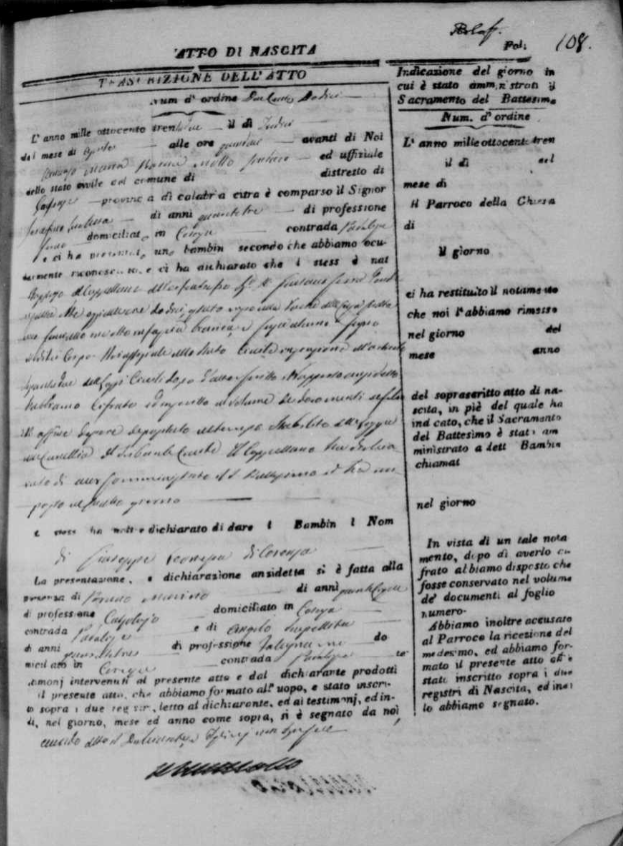
…on the report of the chaplain of the foundling hospital, the Reverend Don Gaetano Ferraro(?), that today at the 12th hour a little boy was left in the wheel (ruota) of the said house, wrapped in white swaddling bands, a son of unknown parents… [The report was made] to us, the civil registrar, as the civil laws require. Having read it, we have numbered it and placed it in the volume of documents… [The baby was] left at the time set by the rules of the foundling house… The chaplain has declared that he administered baptism to him on that same day.
Birth act, Cosenza, 16 April 1832, fol. 108 (translated excerpt)
The Leonetti line therefore begins with him. Nothing records who his parents were.
Editor’s note: Cathy guessed Esposito, a surname often given to foundlings. The registrar named him Leonessa, and at his 1855 marriage he was “Giuseppe Leonessa Esposito.”
Carmela’s Family: the La Torres and Calominos
Carmela La Torre was born on 16 June 1837 in Castagna. Her family can be traced back several generations in Montalto:
- Parents: Francesco Maria La Torre (born about 1803, died about 1843) and Caterina Calomino (born about 1813), married September 1836. Caterina stood as godmother at dozens of Castagna baptisms; she may have been the village midwife.
- La Torre grandparents: Giuseppe La Torre (about 1745–1820) and Carmela Filippo. Carmela was named after this grandmother.
- La Torre great-grandparents: Leonardo La Torre and Serafina Crispo(?).
- Calomino grandparents: Francesco Antonio Calomino (baptized 1787) and Giuseppina Fullone (baptized 1793), married 16 April 1812.
- Earlier generations:
- Andrea Calomino (died 1800) and Chiara Di Lio (died 1811, aged 60, of the Villa della Castagna)
- Saverio Fullone (died 1796) and Eugenia di Filippo
- Francesco Calomino (died 1786) and Rosa Sanna (died 1784)
- Vincenzo Di Lio (died 1785) and Teresa Arturi
Petrina’s Family: the Filippones of Petralia Sottana
Petrina Filippone was the daughter of Stefano Filippone (born 20 January 1849 in Petralia Sottana, in the Madonie mountains of Sicily; died 21 July 1926 in Chicago) and Giuseppa Serafina Ciappa (born about 1856). They married in Petralia Sottana on 20 June 1875. Stefano was a stonecutter, the son of Giuseppe Filippone and Pietra Geraci. Giuseppa was the daughter of Gaetano Ciappa and Giuseppa Maria Carapezza.
Stefano came to America through New Orleans about 1890, which explains the family memory of “Sicily to St Charles, Louisiana.” His family followed about 1892 and settled in Chicago’s Little Italy on Taylor Street. Their children were Petrina, William (1889–1920) and Maria Giuseppina (1894–1966). Stefano and Giuseppa became citizens in 1900. Stefano returned to Sicily at least once, around 1919–20.
Mary married John Murtha at Holy Family Church on 21 September 1913. William, a furniture-wagon driver, married Alpha Groves at St. Charles Borromeo on 28 September 1919; he died a year later, on 14 October 1920.
Stefano’s 1926 death notice names him as “father of Mrs. Louis Leonetti and Mrs. John F. Murtha, and the late William.”
Louis in Nineteenth Ward Politics
In the 1890s Louis was one of Alderman John Powers’s men in the Nineteenth Ward, one of the Italians who, as a rival alderman put it in 1898, were “in the habit of delivering the Italian vote.”
- October 1897. As a constable, Louis was knifed in both legs trying to stop a fight in a saloon on South Jefferson Street. Doctors feared he would die. (Chicago Chronicle, 4 Oct 1897.)
- April 1898. On election day he was arrested for assaulting Professor William Hill of Hull House at the polling place at 358 Halsted Street, and released on bonds signed by Alderman Powers. No outcome was reported. (Chicago Tribune, 6 Apr 1898.)
- 1899. He was indicted for taking an Italian voter, Gessaro Mariano, to the polls in November 1898 to vote in the name of an absent man, Dominick Bruno. A jury convicted him in June 1899, and he was sentenced to Joliet penitentiary. The Illinois Supreme Court upheld the conviction (Lionetti v. People, 183 Ill. 253), and the case became a standard precedent in Illinois election law.
- 1899–1901. He entered Joliet on 31 July 1899 as convict no. 6666, worked in the shoe shop, was paroled on 3 July 1900 to work for a grocer, and was discharged on 14 June 1901.
- 1911. He was an incorporator of the Società Fratelli Bandiera di Mutuo Soccorso Unione Colombo, a mutual-aid society, probably of immigrants from the Cosenza area (the Bandiera brothers were executed at Cosenza in 1844).
Twenty years after Joliet he was a bailiff of the municipal court, and by his death a deputy sheriff.
Chicago: The Aldermen’s Wars
The Aldermen’s Wars were a string of murders and riots between Alderman Johnny “de Pow” Powers and Anthony D’Andrea from 1916 to 1921. More than 30 people died in the struggle for control of Chicago’s 19th Ward, the Little Italy where the Leonettis lived.
- Allan May, “Chicago’s Unione Siciliana 1920–1930: A Decade of Slaughter (Part One)”, AmericanMafia.com
- The Chicago Crime Scenes Project: Alderman John Powers’ Home Bombed by Political Rivals
The 1920 Bombing

A dynamite bomb thrown at the house at 612 South Morgan Street at 12:30 o’clock this morning wrecked the house and drove 20 families into the street. They were taken in by neighbors. Only one boy was injured, which seems remarkable, considering that windows were shattered for a block around, and the house was demolished.
The first two floors are occupied by Peter Batalleo and Louis Leonetti and their families. Leonetti is a bailiff in municipal court, and it is believed the bomb may have been a result of some arrest he made in the past. His son, Amerilla, was cut about the head by the blast.
Chicago Daily Tribune, 4 January 1920
Editor’s note: The son the Tribune calls “Amerilla” was Emil Leonetti, who was 13 at the time. His given name may have been America.

The bomb explosions which in the last week have endangered the lives of two Italian Democratic leaders in the Nineteenth ward were attributed last night by Ald. Johnny Powers to recent strife between Democrats and Republicans.
Early on Sunday morning the residence of Representative Charles Cola at 817 Forquer Street was partially wrecked. The Black Hand was blamed.
A week ago Louis Leonetti of 612 South Morgan Street, a friend of Cola, was blown out of his bed by a bomb. This incident was classed as “mysterious.”
Investigation last night revealed that there have been recent “flare-ups” between Italian factions of both parties.
Politics, Says Powers
“It seems to me to be a case of politics,” said Ald. Powers. “Italian Republicans and Democrats have not been on good terms and may be that the bomb play has been injected for revenge.”
Representative Cola denied he was a target in the bomb explosion. He also denied knowledge of any political strife.
Leonetti, a municipal court bailiff, admitted political friendship with Cola, but denied any partisan feuds.
Chicago Daily Tribune, 12 January 1920
The Black Hand Letters
Two extortion letters addressed to Luigi and signed by La Mano Nera, the Black Hand, survive in the family. A transcription of the Italian and a translation follow each letter. The spelling is the writers’ own.
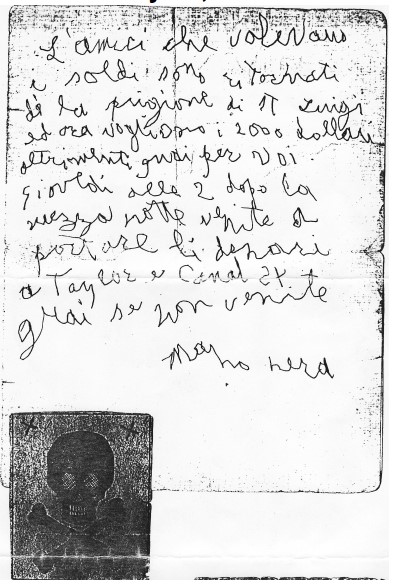
L’amici che volevano i soldi sono ritornati da la prigione di St Luigi ed ora vogliono i 2000 dollari, altrimenti guai per voi. Giovedì alle 2 dopo la mezzanotte venite a portare li denari a Taylor e Canal St. Guai se non venite. Mano Nera
The friends who wanted the money have come back from the prison at St. Louis, and now they want the $2,000. Otherwise, woe to you. Thursday at 2 after midnight, come and bring the money to Taylor and Canal Street. Woe to you if you don’t come. Black Hand
Editor’s note: “St Luigi” is the letter’s own Italian for St. Louis. 14 May 1921 was a Saturday, so the Thursday meant was probably 19 May.

Caro amico, finalmente siamo giunti al giorno da voi venire a dovere. Vi preghiamo spressantemente di chiederci la somma di 5000 dollori al più presto che ricevete la nostra lettera. Rivolgetevi a buoni amici e non fate il carogna, che sarà peggio per voi e di tutta la vostra famiglia. Considerate per bene che cosa vuol dire la Mano Nera.
Dear friend, at last the day has come for you to pay what you owe. We urgently ask you to hand over the sum of $5,000 as soon as you receive our letter. Turn to good friends [for the money], and don’t play the scoundrel, or it will be worse for you and your whole family. Think carefully about what the Black Hand means.
Editor’s note: The envelope is addressed to Luigi Leonette, 1258 S. Fairfield Ave., Chicago, and postmarked 27 February 1925.
A Family Story: the Black Hand Fire
The family tells a story that has not yet been found in the newspapers. An uncle, possibly Louis’s brother Frank, was making his own wine when the Black Hand burned his house down. They tied him to a chair in the yard, made him watch, and told him he would have been inside if not for his brother Louis’s connections. The family thinks this may be why Frank went to Montana.
The 1910 and 1930 Censuses
1910
In 1910 the family lived at 702 South Morgan Street in Chicago’s Ward 19 (indexed under “Leonato”). Louis owned the house and was foreman of a sewer gang. Petrina had borne 7 children, 5 of them living, and they had been married 14 years.
| Name as written | Age |
|---|---|
| Louis | 38 |
| Mamie [Petrina] | 28 |
| Rose | 14 |
| Samuel [Thomas] | 8 |
| Munro [Monroe] | 5 |
| Emilio [Emil] | 4 |
| Carmella [Camille] | infant |
1930

In 1930 Louis Leonetti, 65, was head of a household at 1258 South Fairfield Avenue in Chicago. He was born in Italy about 1865 and came to the United States in 1880. His wife Petrina came with her parents about 1892. This census understates her age; other records place her birth about 1878–80. The ages it gives at first marriage (Louis 25, Petrina 14) don’t agree with other records and aren’t reliable.
| Name | Age |
|---|---|
| Louis Leonetti | 65 |
| Petrina Leonetti | 46 |
| Emil Leonetti | 24 |
| Camille Leonetti (my grandmother) | 20 |
| Edward Leonetti | 17 |
| Martha Leonetti | 14 |
| Richard Leonetti | 12 |
| Mary Leonetti | 11 |
Rose (married to James Picone), Thomas and Monroe were already living elsewhere by 1930.
Photographs
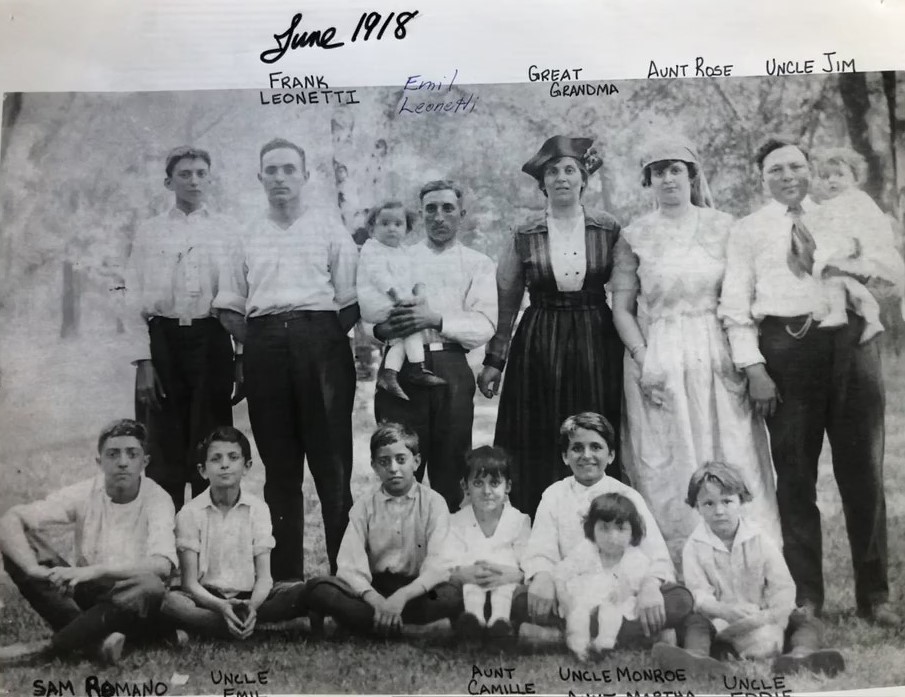
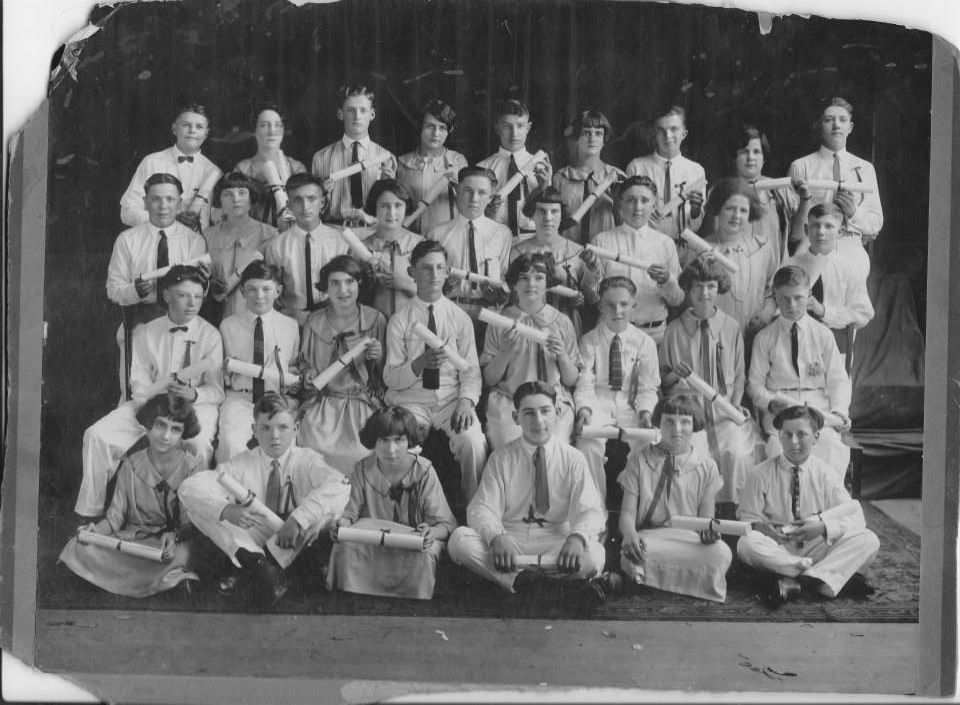
Tap or click any photograph to see it full size.

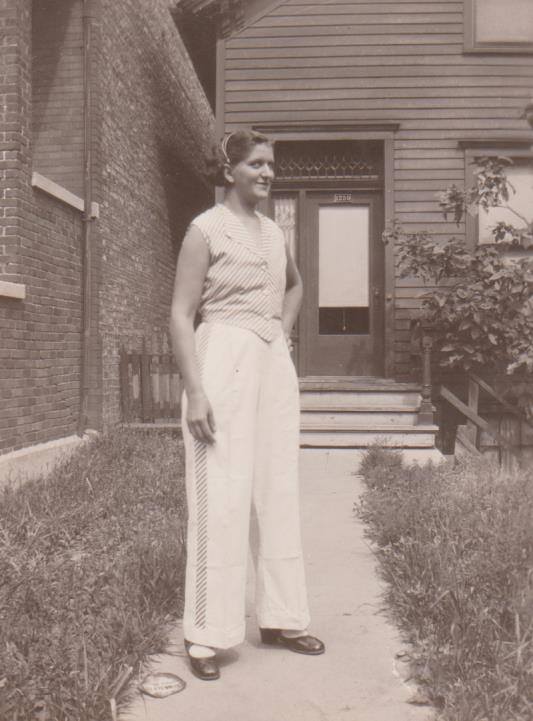
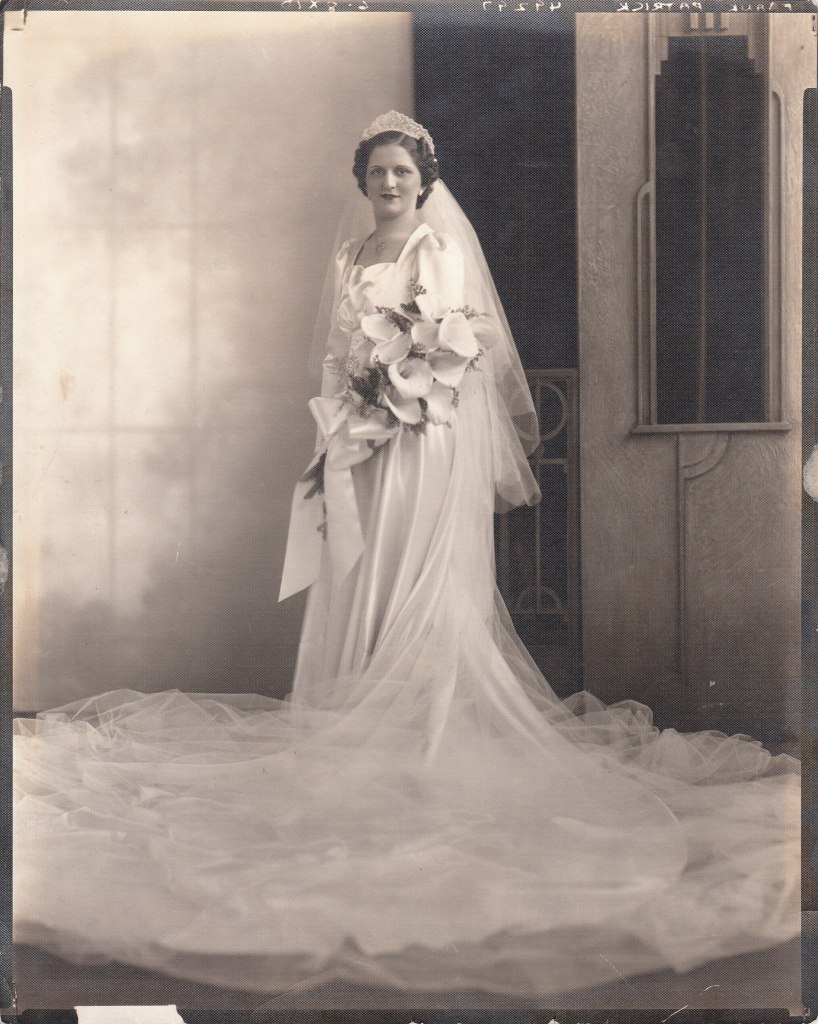
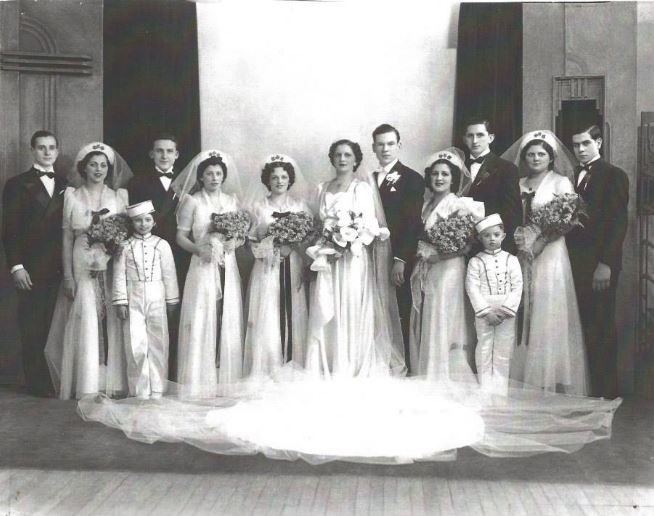


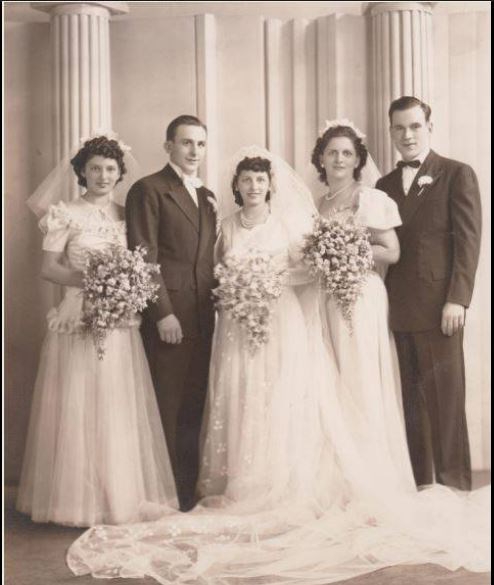


Learn More
- The Cosenza Exchange: Santa Maria La Castagna church records (parish of Santa Maria della Neve; baptism extracts 1746–1932)
More Stories
Rose Picone and Petrina Leonetti won Cook County approval to rezone 34 acres at Sutton Road and Lake Street, in Hanover Township, near Bartlett, for an outdoor theater they planned to run themselves. The family remembers the land as a family farm, where Aunt Rose and Eleanor lived. The Star-View Outdoor Theater opened on 15 October 1948. In June 1949 it sued the Balaban & Katz chain and seven film distributors in federal court, complaining that it could not get films until 30 days after the Elgin theaters.
More Photos

Sources
Italian records
- Birth act of Luigi Leonetti, 25 March 1865, civil records of Montalto Uffugo (Santa Maria La Castagna), Italy.
- Cosenza, births 1832, act no. 212, fol. 108 (Giuseppe Leonessa di Cosenza, a foundling, 16 April 1832). Archivio di Stato di Cosenza, via Antenati; translated for this page.
- Montalto Uffugo, marriages 1855, no. 22, with its supporting documents (Leonessa–La Torre). Archivio di Stato di Cosenza, via Antenati.
- Montalto Uffugo, marriages 1836, no. 28; processetto 1812 (Calomino–Fullone). The Cosenza Exchange.
- Castagna parish (Santa Maria della Neve), baptism of Raffaela Leonetti, 9 July 1876.
- Petralia Sottana, marriages 1875, no. 37 (Filippone–Ciappa). Archivio di Stato di Palermo, via Antenati.
American records
- Cook County birth certificates: Monroe (1904), Edward (delayed, 1943), Richard (1917), Josephine Mary (1919).
- Cook County death certificates: Louis Leonetti (1941, no. 24355); William Filippone (1920, no. 28501); Stefano Filippone (1926).
- Baptism of Maria Giuseppina Filippone, 28 October 1894 (Chicago Catholic parish register).
- United States censuses, 1910, 1920, 1930 and 1940, Chicago, Cook County, Illinois.
- Joliet Penitentiary, Register of Prisoners, vol. 10, convict no. 6666 (Illinois State Archives, via Illinois Digital Archives).
- Lionetti v. People, 183 Ill. 253 (1899).
Newspapers
- Chicago Chronicle, 4 October 1897.
- Chicago Tribune, 28 February 1898; 6 April 1898; 21 and 25 January 1899; 7 June 1899; 19 December 1899; 14 January 1911; 4 January 1920; 12 January 1920, p. 17; display ad, 10 October 1948.
- Dziennik Chicagoski, 5 January 1920.
- Great Falls Tribune, 24 August 1934.
- Daily Herald (Arlington Heights), 3 and 10 June 1949.
- Chicago Tribune death notices: Helen Leonetti (1928), Stephen Filippone (July 1926), James Picone (1940), Louis Leonetti (1941), Frank Leonetti (1954), Petrina Leonetti (1958), Rose Picone (1968), Thomas Leonetti (1971).
Family papers and research
- Black Hand letters of 14 May 1921 and 27 February 1925 (with envelope), family papers; transcribed and translated for this page.
- Research by Cathy Napolitano on the Leonetti and La Torre families.
- Family photographs.
Open Questions
- Does the Cosenza foundling hospital’s own register survive, with any token or note left with the baby, or the name of his nurse in Montalto?
- Where and when did Louis and Petrina marry (about 1895–96)?
- When exactly was Rose born (1896–99)?
- Was Emil’s given name America? The 1920 Tribune calls him “Amerilla.” His birth or baptism record would settle it.
- Louis’s brother Frank went to Montana. Was he really a sheriff there, and why did he go?
- Was “Sen. Sam Romano,” Rose’s cousin, seated at far left in the 1918 family photo, the Illinois state senator?
- Did the family ever answer or report the Black Hand letters?
- Who were the two children who died before 1910?
- The June 1918 family photo: who are the man holding the baby (labelled “Emil Leonetti” in later ink) and the unlabelled boy seated in the middle of the front row? Is the boy at back left Thomas, and are the babies Richard and Eleanor Picone?
- Who was the young Frank Leonetti in the 1918 photo? He is too young to be Louis’s brother Frank (born 1868); perhaps a nephew.
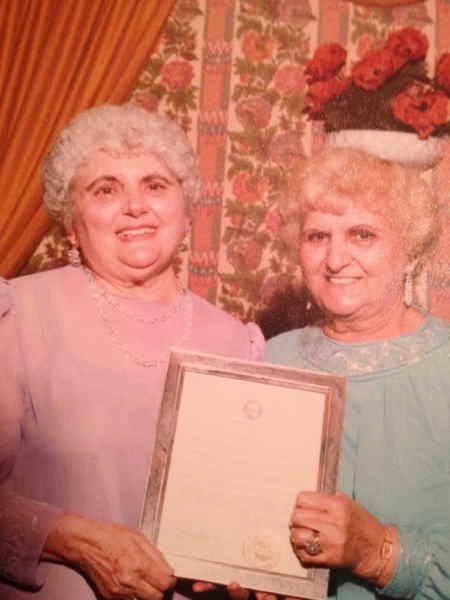
- Can you date the photographs of Camille with Rose, of Marie’s retirement party from Commercial National Bank, and of Camille and Frank’s vacation (Wisconsin Dells?)
How You Can Help
If you are related to the Leonettis, La Torres or Filippones, or have records, photographs or stories about them, I would love to hear from you.


Paternal Lines: Family History · Leonetti Family · Hawryluk Family