Durant Ashmore Essay Collection

Durant Ashmore has lived in Greenville County, South Carolina for his entire life. His family is Seventh Generation Greenville County, since 1787. He has ancestors who has fought on both sides of the Revolutionary War, and the research into his family’s past has sparked his interest in the time of the Revolutionary War, and the history that has happened in Backcountry of South Carolina.
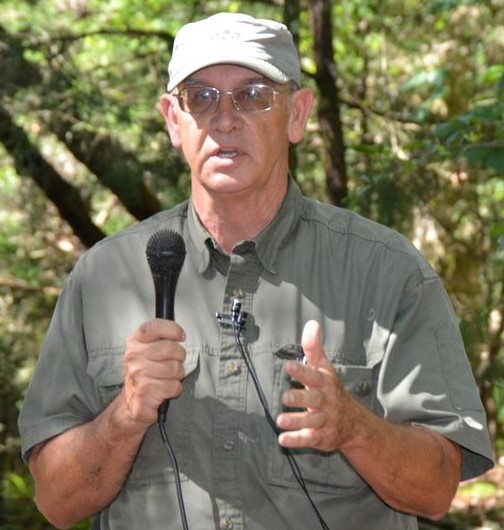
Durant is a professional nurseryman and landscape designer. He also gives lectures on the history the Revolutionary War, as well as hosts field trips to various locations that historical events have taken place. 

In November of 2024, Durant was presented with the DAR Historic Preservation Recognition Award. This award recognizes and honors an individual or group that has done recent remarkable volunteer work at the community level. The Historic Preservation Recognition Award recognizes and honors an individual or group that has done recent remarkable volunteer work at the community level.


This collection of essays have been gathered from lectures and social media posts, and are shared here with permission.

Click on an article in the list below to jump directly to it.


The Battle of Beattie’s Mill

March 23, 1781 – the Battle of Beattie’sMill – a battle that never occurred.

There never was such a place as Beattie’s Mill. Thats why the location was never found.

However, there was indeed a battle on Mar 23, 1781, but it was it was fought in Abbeville County (not McCormick) and the name of the battle is Dunlop’sDefeat.

The confusion began with Hugh McCall’s book “the History of Georgia” published about 1816.

Hugh McCall was 13 years old at the time of this battle. His father, Col. James McCall, was one of the Revolutionary War’s most heroic officers and co-commander of the battle that occurred on Mar. 23, 1781.

Sadly, Col. James McCall died from smallpox about 6 weeks later.

After the war Hugh McCall’s family moved from Abbeville, SC to Georgia. Hugh McCall talked at length to his father’s friends about their wartime experiences and wrote his book based on their recollections.

The problem is, Georgia veterans do not know South Carolina geography.

In their pension applications written in 1832, these veterans describe this battle as occurring on Hogskin Creek, Little River, Long Cane Creek, etc. There is absolutely no consensus.

For some unexplained reason, Hugh McCall ascribed the location of this battle to a place that never existed. That led some folks to assert that Beattie’s Mill must have occurred somewhere in McCormick County, SC. This assertion held sway for over 200 years.

However, the answer to this question lay not in the Patriot Pension Applications, but in the Loyalist Pensions.

Nancy Lindroth is a Revolutionary War researcher from Augusta. She spent 20 years trying to find the location of “Beattie’s Mill” and finally found the answer – in London.

Samuel Hill was a Loyalist who fought in this battle. In fact, the battle ended in Samuel Hill’s house in the Long Cane community in Abbeville County, many miles away from the presumed “location”.

Loyalist Samuel Hill was shot through the arm and the ball lodged in his body. He was left for dead on the floor of his house. He was taken to the British fort at Ninety Six where his arm was amputated. He returned to England where he received a lifelong pension for his losses.

Nancy Lindroth searched for Samuel Hill’s deeds and was able to determine the exact location of his house, and the exact location of the battle.

Based on Ms Lindroth’s information, four years ago a field research team examined the location. Rifle balls fired and unfired, musket balls fired and unfired, shotgun pellets, buttons, buckles and other accouterments of a Revolutionary War battle were found. These artifacts prove beyond doubt that the Battle of Dunlop’s Defeat occurred about 5 miles from Donalds, SC along the banks of Long Cane Creek.

The Battle of Dunlop’s Defeat is one of South Carolina’s newest discovered battlefields.

The picture is Samuel Hill’s house where the battle ended. It was torn down in the 1980s.


Bail Out Day

Today is Bail Out Day – the day in 1945 when my father -in-law – Bill Kallam – bailed out over Yugoslavia after his B-24 was shot down. Below is his story, dedicated to all veterans everywhere.

MARCH 14, 1945

“BAIL OUT DAY”

The WWII war time experiences and reminiscences of

Lt. William Lee (Bill) Kallam

Dedicated to the veterans of WWII, the friends and family of the Kallam clan and especially to William Kallam Ashmore, age 7, who is Bill’s namesake and only grandchild and who was present during the narration of these events.

Compiled by:

Durant Ashmore
March 21, 2004
Durantashmore@aol.com

BAIL OUT DAY

Bail out day has always been a tradition in the Bill Kallam family. According to Bill’s oldest daughter, Julie Turner, the tradition has been to coax out from Bill just what exactly the hell happened on the fateful day in question. Every March 14 Bill would quietly make a comment “It’s bail out day”. This was basically the extent of the celebration. Bill was always too shy or too reticent to discuss the details of his military service. In fact, he has been downright bashful. He seemed to feel that people would not be interested in his days as a member of the United States Armed Forces during World War Two.

Bill has seemingly always considered himself to have had typical wartime experiences that were not particularly special. All of the veterans of his era could tell the same types of stories that he could. What Bill has not given a lot of consideration to, however, is that he offers a unique perspective on a momentous period of American history. It is important for present generations to understand the values and events of the World War Two generation. These values and events continue to shape the world in which we live today. It seems odd to think that a WWII bomber pilot would ever be shy, but that’s Bill Kallam.

On March 8, 2004 Bill Kallam celebrated his 81st birthday. At a gathering of friends in honor of this occasion, “bail out day” was mentioned. The consensus of the group was that fully fifty-nine years after the occasion nobody really knew the details of what had occurred. Minds started thinking and wheels started spinning. The idea evolved that a celebration and narration of these events was past due. As a result, a dinner party was planned to get the whole story out. Rick and Connie Sumerel were the masterminds and gracious hosts of this event (I think it was Connie’s idea first!).

On the fifty-ninth anniversary of “bail out day”, March 14, 2004, Bill gave his narration of events of his wartime experiences. Rick Sumerel obtained a map of Europe and pinned it to the fireplace mantle. This was crucial to understanding the geography of the area in which the events occurred. A model B-24 plane was used for further clarification and explanations.

Present that evening at the Sumerel’s house were Bill Clarke, Marty and Ruthi Lutz and their daughter Gabby (13), Rick and Connie Sumerel and their sons Clarke (16) and Hughes (11), Billy and Julie Turner and Durant and Ann Ashmore and their son Kallam (7).

Most of story contained here comes from this narration, although some information is from follow up interviews and two of the definitive books on the subject. These books are Robert F. Dorr’s B-24 Liberator Units of the Fifteenth Air Force and Duane L. and Betty J. Bohnstedt’s 460th Bomb Group History.

World War Two started on Sept. 1, 1939 when Nazi Germany invaded Poland. Bill was sixteen years old at the time. He was visiting in Timmonsville, SC with his father who was a tobacco warehouseman. Bill’s father (Fletcher Lee Kallam) spent six weeks a year in Timmonsville and Bill would usually spend a week or so there every year.

The bloody war continued throughout the rest of Bill’s high school years and on through his college days at the Citadel. He was a member of the Air Corp Reserve while a student. In 1943 he was “pulled in” to the Air Force as one of 200 Citadel cadets requested for service.

Bill was sent to flight training school at Ocalla, Florida. There he learned to fly. He had his first solo flight on Nov. 26, 1943 and has been flying ever since for the past 61 years. The first plane he flew was a PT-17, which is a trainer.

As part of Bill’s training he was sent to three flight schools, each one successively more advanced. These were the primary, basic and advanced schools. After Bill completed advanced flight school in Valdosta, Ga. he was commissioned as a 2nd lieutenant in the United Stated Air Force on May 23, 1944.

After that Bill was sent to Maxwell Air Force base in Alabama. This was a transition school where he learned to fly four engine planes. Next, Bill was sent to Chatham Field in Savannah to learn to fly the B-24. He had practice bombing runs over the ocean. This training lasted for six weeks.

After that Bill started training with nine other airmen who would be his crew in combat. These men trained together in the B-24 for an additional six weeks in order to get to know each other and, just as importantly, get to know the plane.

After all this training, the crew was deemed ready for combat in the European theatre of war. They were sent to Mitchell field in New York on Feb. 12, 1945 where they picked up a brand spanking new B-24M airplane made by the Ford Motor Company in Detroit, Michigan. Bill remembers the Ford logo stamped on the wheel yoke.

Lt. Kallam and crew were on their way to war. They flew from Mitchell field to Bangor, Maine, then Gander, Newfoundland and then to the Azores. From the Azores they flew to Marrakesh, Morocco and then to Tunis. From Tunis they flew around Sicily and landed in the center of Italy in a town named Goia. Upon landing Lt. Kallam was given a receipt for the plane he had just flown halfway around the world and delivered in satisfactory condition to the United States Air Force. Bill remembers someone telling him sometime that a new B-24 cost $185,000.

Lt. Kallam and his crew were members of the 460th Bomb Group, which was a part of the Fifteenth Air Force. The Fifteenth Air Force was a massive military organization which was based in central Italy. The purpose of the Fifteenth Air Force was to bomb Nazi Germany into submission. The Fifteenth Air Force in Italy in conjunction with the Eighth Air Force in England could bomb any target in any territory controlled by the Axis enemy forces.

The bases that the Fifteenth Air Force occupied were just recently occupied by the Italian Air Force. The United States forces in North Africa had pounded these bases for months before central Italy fell under Allied control. As a result, living conditions were poor. There were no amenities. The manpower levels grew at faster rates than the Air Force could build bases. Living in tents was the common practice, and the weather in central Italy in the Winter of 1945 was not particularly hospitable. In fact, as we will see later, the bad Winter weather in that part of the world in 1945 will have a direct bearing on central features of this story.

Lt. Kallam and his crew lucked out on their living quarters. They were a replacement crew, one sent in to fill in the gaps in squadrons in which crews reached their milestone 35 missions and were rotated home, or when crews were lost due to enemy combat. The day after they arrived one such crew rotated home and sold their quarters to Lt. Kallam’s crew. It was a concrete building with a heater in it. While not very fancy, it did keep the crew warm and dry. It cost the officers $50.00 apiece to purchase this abode.

In 1945 Adolf Hitler and his “Thousand Year Reich” were rocking back on their heels. One of the darkest chapters in 20th century history was coming to a close, but it wasn’t over yet. The Nazi onslaught which at one time controlled North Africa, Italy, France, Northern and Central Europe and one third of Russia was now reduced to controlling only parts of Germany, Italy, Czechoslovakia and Austria. Hitler committed suicide on Apr. 30, 1945. The Russian Army was converging on Berlin from the East and the British and American Armies were converging on Berlin from the West. They would meet in May and the war would be over in Europe. In the meantime, thousands of POWs, Jews and political prisoners were dying every day in Nazi concentration camps.

The plane that Lt. Kallam flew was the B-24M “Liberator”. It was designed for one purpose and one purpose only. It was designed to bomb the Third Reich into submission, and it was very effective at its job.

The architectural adage “form follows function” was aptly illustrated in the design of the B-24. It was not a pretty aircraft. It had an enlarged fuselage which was out of scale with the rest of the plane. This fuselage carried bombs, and it carried a lot of very heavy ones. It could either carry ten 500 pound bombs or six 1,000 pounders. With its complement of four 1,900 horse power Pratt and Whitney engines it could also carry these bombs further and faster than any plane the Air Force had at its command.

The B-24 had a distinctive twin rudder tail. According to Bill, this twin rudder system added to the stability of the aircraft. When friend or foe saw this big plane approaching it was readily apparent what type of craft it was due to the enlarged belly of the plane and the twin rudder tail configuration.

The B-24 bristled with 50 cal. machine guns. There were twin 50s in the nose turret, twin 50s in the tail turret, twin 50s on top and twin 50s on bottom. On the side of each plane were waist gunners who manned single 50 cal. guns. These machine guns covered any angle of approach that German fighter pilots could use to attack the plane. The German pilots knew that any time they had a chance at firing at a B-24, the B-24 had an equal or greater chance of firing back. When the B-24 was flying in convoy the combined firepower of these planes was a formidable defense.

It took a crew of ten to fly the B-24. The pilot, co-pilot, navigator and bombadier were the officers. The enlisted men were the nose gunner, tail gunner, two waist gunners, top turret gunner/ engineer and bottom turret gunner.

According to Robert F. Dorr in his book B-24 Liberator Units of the Fifteenth Air Force (Osprey Publishing Limited, Oxford, 2000) the B-24 was not designed for comfort or safety. Only the pilot and co-pilot had seat belts. The rest of the crew was apparently expected to just hold on tightly in case of flak explosions, crash landing, heavy turbulence or any number of other jolts, quakes and bounces experienced by aircraft in combat situations.

A particularly hazardous assignment on this plane was the station of the belly gunner. The belly gun turret was raised and lowered during take-off. There wasn’t enough clearance for the plane to land with the turret extended. After the plane was in flight the belly turret was lowered by hand with a winch into position. The other crewmen manned this winch, the gunner had no control over it. This meant that if the other crewmen were injured in combat or passed out due to lack of oxygen, the belly gunner was left alone, suspended beneath the belly of the plane with no one to help him in his predicament. More than one belly gunner died when, on a crash landing, no one was there to raise his turret and free him from his confines.

The B-24 was built before the era of pressurized cabins. In fact, it was open to the outside air. The waist gunners manned open windows with the wind whistling through during the entire flight. The bomb bay doors weren’t sealed and a great deal of noise and wind rushed through them.

What made this open air system so bad was that the B-24 was designed to fly at high altitudes. It regularly flew above 20,000 feet. The air temperature at 20,000 feet is cold. It is very cold. In fact, the air temperature at 20,000 feet ranges from 0 degrees to minus 60 degrees. These temperatures are below the tolerance levels for humans.

To combat the cold conditions the crew wore heated flight suits. These were like coveralls with wires running through them They plugged in at the seat. On top of the flight suit fleece lined jackets and other clothing was worn. The boots were not heated, and Bill says this was the roughest part. Inevitably, the feet would get bitter cold.

In addition to the heated flight suits, the crew had on oxygen masks. Once the plane reached 10,000 feet these masks were strapped on. Otherwise, the air was too thin to breathe. With the oxygen masks on and the noise of the plane, communication between crewmembers was a difficult task.

According to Bill, flying these aircraft in convoy was no easy task. Each pilot had to maintain his position in his “element”, which consisted of six aircraft flying in a tight configuration. It was a never ending push and pull on the throttle and rudders to keep in correct position. The pilot flew for thirty minutes and then turned over the controls to the co-pilot for thirty minutes. It was physically exerting and very stressful trying to keep in formation and look out for enemy fighter planes at the same time. The missions were for hundreds of miles over hostile territory and would last for eight hours or so. The B-24 had no bathrooms.

It was also difficult to turn the B-24, particularly when flying in formation. This took a great deal of planning and strenuous execution to be successful. Usually, the group flew fairly straight to the IP. IP stands for Initial Point. Once the aircraft reached the IP, they followed the coordinates to the target.

The B-24 flew before the era of precision bombing. The B-24s practiced “carpet bombing”. The pilots would follow a lead plane. This pilot had higher rank and more experience than the following crews. If this plane experienced difficulties and had to turn back there was a second in command. When the lead plane dropped its bomb load the other planes followed suit. It was hoped that the bombs hit their target.

Another factor entered the picture when the planes reached the IP. This is usually when the flak started. Flak is German anti-aircraft fire. Flak was fired by the 88 millimeter cannon which was the German Army weapon of choice for air defense. This powerful gun could shoot exploding shell five miles straight up into the air.

Bill says you could see the shells exploding in black clouds. At first they would explode below. The next ones would be a little higher. Soon, they would be exploding at the same altitude as the plane. The gunners below would calibrate their ordnance so that the shells would explode in the midst of flying convoys.

As the territory of the Axis armies was shrinking, the concentration of anti-aircraft guns would increase. When the Germans retreated they moved their guns first and the Army would follow behind. In one picture of a B-24 flight over Vienna, 50 flak bursts can be seen in the immediate area in which a B-24 is flying.

Part of the Fifteenth Air Force’s mission was to destroy German industrial capacity. Railroad marshalling yards and oil refineries were targeted in particular. Also targeted were German aircraft facilities. The Fifteenth Air Force was so successful at this particular job that by 1945 they had destroyed the Messerschmitt aircraft factories to such an extent that there were no more fighter aircraft to contend with over the skies.

However, this did not lessen the danger of flak. A direct hit would destroy an aircraft. A near miss could do serious damage. Two and three inch pieces of shrapnel could slice through the metal skin of a B-24. On one mission Lt. Kallam and crew counted 90 holes in their plane from flak shrapnel. The sound of shrapnel was likened to someone beating on the side of the plane with a baseball bat.

All of these factors of world events, condition of the B-24 aircraft, weather in Italy and a tall lanky boy from Winston-Salem intertwined together to produce the events that led up to “bail out day”.

Apparently, the first mission for young Lt. Kallam is not memorable. For a man who can remember all the dates given in this story ( he has referred to no notes at all in his narration), he can’t remember the first time he flew in combat. Perhaps the events of his second combat flight so overshadow his first flight that he can be forgiven.

The second mission for Lt. Kallam and his crew was to fly to Nove Zamke, Czechoslovakia and bomb the railroad marshalling yards there. The closer the plane got to the target, the heavier the cloud cover became. This part of Europe was notorious for poor weather conditions. Veteran Fifteenth Air Force pilots rank poor weather on an equal footing with flak and enemy fighter planes as the most serious obstacles they faced in dealing with completing their missions.

The attack on Nove Zamke is described by Duanne L. and Betty J. Bohnstedt in their book 460th Bomb Group History (Taylor Publishing Co., Dallas, 1996). “14 Mar 45 — Forty-one scheduled aircraft were dispatched to bomb the Nove Zamke Marshalling Yards in Czechoslovakia. The Red Force consisted of twenty one aircraft; the Blue Force had twenty planes…. One aircraft of each force returned early …

The Blue Force of nineteen planes penetrated to the area of the IP (initial point) for the primary target. Due to haze and clouds, it was impossible to establish positive identification of the IP or the target itself, which was close to the Russian line. The formation proceeded to the first alternate target, Szombathely Marshalling Yards, but here again weather conditions were unsatisfactory for a visual run. They then attempted to make a visual run on the Zagreb West Marshalling Yards, but this target was also closed in. Since many of the aircraft were now low on gasoline, seventeen returned to the base. One plane landed at Zara to refuel, and one ship was missing. A 460th pilot had heard the aircraft in contact with the Big Fence (a radar installation), saying it was over the Adriatic and low on gas. Big Fence had recommended a heading of 185 degrees. Due to fuel shortage and damage sustained in the target area, the William Kallam crew (760) was forced to seek an emergency field. Because of navigational handicaps, attempts to locate the Zara field were unsuccessful, and the crew was forced to bail out in the area of Trojir, Yugoslavia. They were immediately picked up by Partisans and peasants, who guided them to a nearby British Mission. On 17 Mar 45, they were flown back to Bari on a C-47. Members of this crew were: William Kallam, Edmund Kay, James Unger, Robert Rooney, James Kingman, Norman Shepard, Israel Ellenburg, Dannie Ross, Richard Pachico, and Henry Berry.”

On the Nove Zamke mission, flak destroyed engine No.1. This is the engine located on the far left of the pilot. Lt. Kallam cut the fuel and feathered the propeller blades. Feathering the blades is a process in which the blades are turned into the airstream as opposed to against the airstream. When a pilot “pushes the red button” (Kallam) the blades rotate 90 degrees and have no effect on the flying of the aircraft.

Lt. Kallam continued to fly his plane after being hit, searching in vain for the emergency airstrip located in Zara, Yugoslavia. The cloud cover rendered visibility impossible. At some point Lt. Kallam jettisoned his bomb load over the Adriatic. This would make the fuel last longer, as well as being much safer in case of a crash landing.

While searching for Zara, the fuel to engine Nos. 2 and 4 ran out. It was apparent to the crew that the only alternative was to “bail out”. The crew jumped one by one from the open bomb bay doors. The last man to jump was Lt. Kallam, and for the first and only time in his life he pulled the ripcord on a parachute. The parachute opened and he was drifting through space. It was at this time that the scariest part of the whole ordeal occurred. The plane was continuing to fly, but only on the No. 3 engine. With no one at the controls this engine began turning the plane in a circle. The plane was falling at the same rate of speed that Lt. Kallam was, and it started to come right back at him. Bill shrugs his shoulders and says “it missed me” and he continued to float toward the ground.

The plane crashed into the side of a mountain in Yugoslavia. It burst into flames. The crew could hear the 50 cal. machine gun rounds exploding as the heat from the fire reached them.

When Lt. Kallam reached earth he landed on his back. Upon landing some cartilage on his ribs was torn, but this did not prevent him from flying nine more missions before the war ended. When this cartilage damaged was later repaired it led to a six month hospitalization due to infection.

Communist Yugoslavian Partisans watched the parachutes float to the ground. They drove around in a truck and collected Lt. Kallam’s crew. Bill states that within an hour the crew was all back together and on their way to a British mission from whence they were sent back to their base at Goia. Within two to three days they had another plane and were again flying missions.

Bill says that he was worried that the brass would give him a hard time about losing his aircraft, but that he never got a negative word about it. He was surprised that there was even a rumor that he would receive the Distinguished Flying Cross. In his bashful way he states that all he did was just jump out of an aircraft.

Lt. Kallam flew 9 more missions before he was recalled to the United States. He flew missions to Ganz, Vienna, and Regensburg. He flew to northern Italy to help the ground forces which were still battling German Army holdouts. At some point during this time 2nd Lieutenant Kallam was promoted to 1st Lieutenant.

In May of 1945 the war in Europe was in its last days. Lt. Kallam was recalled to the U.S. to train in the new B-29. This was a massive plane which would continue to carry out the war against Japan. Invading Japan was a daunting task. It was estimated that it would take an army of one million men to do so.

On Aug. 6, and Aug. 9, 1945 atomic bombs were dropped on Hiroshima and Nagasaki, Japan. The Japanese emperor capitulated and the war was over. If not for the A-bomb, Lt. Kallam would have continued to fly combat missions.

After Bill spent six months in the hospital for his injury, he was discharged. The Air Force simply didn’t need him any more. He had signed up for the duration with no idea when his discharge would occur.

After the war Bill was a member of the Air Force Reserves. During this time he was promoted to Captain.

Bill finished his college days at the Citadel, and then started working with McLean Trucking Co. He was originally assigned to Indiana, where he met his future wife, Patricia Lee Yount. Bill’s love of airplanes was connected to his love for women. Pat Yount worked for Eastern Air Lines. Apparently due to some embellishments by Bill’s brother, Ted, the true story of how they met has been as clouded as the true story of Bail Out Day. Perhaps it will take another dinner party (with map and other props) to get to the bottom of this story.

Bill was later transferred to Greenville, SC. He married Pat in Indiana on Dec. 19, 1953 and moved his new bride down South.

Bill and Pat had three children. These are: Julie (b Sept. 14, 1955, m Billy Roy Turner Apr. 6, 1988), Bill, Jr. (b Jan, 22, 1958) and Ann (b Oct. 11, 1959, m John Durant Ashmore Dec. 26, 1993). Bill has one grandson, Kallam (b Dec. 26, 1996). Sadly, Pat died on Feb 19, 1997.

Bill liked Greenville a lot. He decided to go into the restaurant business here and in 1963 decided along with Ted to open up a Little Pigs Barbecue restaurant which became a famous Greenville eatery until Bill retired in 1996.

On a clear day look up into the sky. That little plane you see up there flying in lazy circles has an eighty-one year old pilot. It’s Bill, and he’s checking things out. He’s flying North to check out Julie’s horse farm, or he’s heading South to check out Ann’s greenhouses. Wherever he is, he’s enjoying himself.

This tale is told for future generations. It is particularly hoped that Gabby Lutz, Clarke and Hughes Sumerel and Kallam Ashmore are cognizant of just how special a narration they heard at the Sumerel’s house on March 14, 2004. They heard a first hand accounting from an eyewitness to history.

All of these youngsters will be living in 2045. They will be in their 40s and 50s. Remember March 14, 1945. I hope that you will be able to retain the facts of this story and pass it on. You will be able to relate first hand information to future generations from 100 years in the past.

Even in the year 2045 your life will be directly affected by world events which were occurring on March 14, 1945 – “Bail Out Day”.

Posted to Facebook 3/15/2026


Stephen Cumbo – South Carolina Dragoon

The Laurens County Museum was honored to be the recipients of a beautiful figurine representing Steven Cumbo, a free mixed race Patriot who lived in Edgefield County and fought in numerous battles in the American Revolution. Mike Stelzel, a distant former family member and a member of the Artist Preservation Group, created this figurine.

The history of the Cumbo family is fascinating. Emmanuel Cambaw was a captive on a Portuguese slaving ship which was “pirated” by a British ship on the high seas. The slave ship was taken to the Virginia colony in 1644, and Emmanuel Cambaw was made an indentured servant by the Virginia assembly. He served as an indentured servant from 1644-1665, when he was freed from indentured servitude and granted 50 acres of land in James City, Virginia on April 18, 1667.

The Cumbo family intermarried with both whites and Native Americans throughout the colonial period. Eventually, Stephen Cumbo and his family migrated south and settled in the Ninety Six District in present day Edgefield County. He joined the Ninety Six militia, serving under future General Andrew Williamson.

The military records of Steven Cumbo presented here are found in a Pension Application he submitted in 1827 and from the Cumbo Family website. Information for this commentary is also derived from the Pension Application of Col. Samuel Hammond. Conversations with Cumbo family members provided further insight.

Steven Cumbo’s earliest record of service appears at the 2nd Siege of Savannah in October of 1779. He was at the Siege of Charleston in May of 1780. After Charleston fell he fled to North Carolina and joined with Patriot forces there. He soon signed up for a 10 month enlistment with Capt. Samuel Hammond’s “Regiment of Regular State Dragoons”. He “Enlisted in that Regiment, in which he served to the Expiration of that term, & was honorably Discharged – and was immediately engaged to Serve for three years or During the War in a New Regiment of Horse”’ again under Col. Samuel Hammond.

In his Pension Application Steven Cumbo states that he fought with Andrew Williamson at Savannah and Charleston. In 1827 Col. Hammond certified Steven Cumbo’s application and additionally stated that Steven Cumbo fought at Eutaw Springs (Sept. 8, 1781).

However, since Steven Cumbo fought with Sammuel Hammond for a 10 month period from June of 1780 til March of 1781 and then reenlisted for a three year period under Samuel Hammond, he obviously fought in dozens of battles. 24 year old Samuel Hammond was one of the most active battlefield leaders in the Revolutionary War. Samuel Hammond fought under Andrew Williamson in several battles/skirmishes along the Savannah River in the spring of 1779 and at the Battle of Stono Ferry in June of 1779. As mentioned, Hammond and Cumbo fought under Williamson at Savannah and also Charleston.

After a brief stint while meeting with exiled SC Gov. John Rutledge in Hillsboro, NC, Samuel Hammond and Steven Cumbo returned home to fight in the Backcountry of South Carolina. Capt. Hammond fought at Hanging Rock on Aug. 6, against Patrick Ferguson in the 2nd Battle of Cedar Spring in present day Spartanburg County and fought in the significant Patriot victory at Musgrove Mill on Aug. 19, 1780. Samuel Hammond was promoted to major after that battle.

After Musgrove Mill, Maj. Samuel Hammond’s regiment fought at Charlotte, Kings Mountain, Blackstocks, Rutledge Ford, Long Canes, Hammond’s Old Store, Cowpens, Guilford Courthouse, the Race to the Dan, 2nd Siege of Augusta, Ninety Six and Eutaw Springs.

Since Steven Cumbo was in active service with Samuel Hammond during this time, it is apparent that Steven Cumbo also participated in these battles. The full extent of his service is not known. Bobby Gilmer Moss, who has written the most definitive accounts of the Patriots at Kings Mountain and Cowpens, does not include Steven Cumbo’s presence in these battles. However, Professor Moss does state that his records may not be complete.

After the Battle of Eutaw Springs the British were forced into Charleston to live as refugees for the next 14 months. However, there was still unrest in the Backcountry, particularly in regards to the Cherokees. On Nov. 1, 1781 (two weeks after Yorktown) a mixed group of Scopholites (Europeans dressed as Cherokees) and Cherokees under the command of “Bloody Bill” Bates attacked Ft. Gowen near the SC/NC border, and killed 40 women and children in a most gruesome manner. Ironically, the 10 men defending the fort were rescued, but only after seeing their families massacred.

Gen. Andrew Pickens was sent to curb these Cherokee attacks, and Steven Cumbo was with this command. The Cherokees fled to the hills, but two weeks later on Nov. 17 another “Bloody Bill” entered the scene. “Bloody Bill” Cunningham had begun his Bloody Scout, leaving from Charleston and circling the state with 300 bloodthirsty renegades. Andrew Pickens then began chasing after Cunningham, and eventually chased him back into Charleston, but only after 79 men had been brutally murdered.

Whatever battles Steven Cumbo may or may not have participated in, it is obvious that he signed up for the duration and was an experienced and valuable member of Patriot fighting forces. Steven Cumbo is the epitome of a South Carolina militiaman, always at the ready to do his duty.

Stephen Cumbo’s Pension Application is poignant. It is not known what his birth or death dates are. In any case, in 1827 his application stated “Your petitioner received several Slight Wounds in these Services, but not such as were, while Young, injurious as to induce him to apply for a pension as Others more Severely afflicted were reduced to do: but now that he is Old & Otherwise infirm & helpless with all Very poor, he is Constrained to Ask for Some pecuniary aid for his Support.”

In addition, Steven Cumbo lists his earthly possessions: “one hundred acres of pineland, the title of which is doubtful, one ox two years old, two Potts, one Dutch oven, half a dozen Earthen plates, one dish & One Bold (bowl?), Two beds with furniture, all quite indifferent, 3 small axes, one small shovel plow, Deponent further swears that he has eight persons in his family besides himself, 5 of them unable to support themselves”.

For his services as a valuable militiaman and Dragoon in the Revolutionary War, Stephen Cumbo was granted a pension of “$60 per annum”.

Durant Ashmore

durantashmore@aol.com

2/13/26


South Carolina Plates

Here’s my take on the new SC license plate –

There are 4 caveats that very briefly describe the Revolutionary War:

The Revolutionary War Began in Boston.

Saratoga was the Turning Point.

The Revolutionary War Ended in Yorktown.

The Revolutionary War was Won in South Carolina.

In the north, the war was at a stalemate after the Battle of Monmouth in June of 1778.

In Dec of 1778 Savannah fell and the British now had a toehold in the south.

15 months later, on May 12, 1780, Charleston fell. The Battle of Camden on Aug. 16, 1780 was an absolute disaster and was the lowest point of S.C. fortunes. 2 Continental armies had been captured or destroyed withinin 3 months.

Then, on Aug. 19, 1780, 200 Patriots defeated 500 Loyalists at Musgrove Mill on the Enoree River at the juncture of Laurens, Spartanburg and Union Counties.

Kings Mountain in Oct. and Cowpens on Jan 17, 1781 in S.C. were incredible victories and the tide had turned.

After Cowpens Patriot General Greene (Greenville’s namesake) then retreated to Virginia to resupply in the Race to the Dan. Greene then recrossed the Dan and fought Cornwallis in NC at Guilford Courthouse in March of 1781.

Guilford Courthouse began a series of battles in which Gen. Greene technically lost, but strategically won. The British kept the fields after these battles, but shortly had to retreat, never to return.

Hobkirk Hill in Camden on Apr. 25, 1781, The 2nd Siege of Ninety Six in May-June and Eutaw Springs on Sept 8 forced the British to retreat, retreat, retreat.

After Eutaw Springs the British were forced to live as refugees in Charleston for the next 15 months until they left in defeat on Dec 14, 1782.

Depending on your definition of a battle, Soutb Carolina had more battles than any other state. New Jersey can make a competing claim.

Over 400 battles were fought in our state. Some of the most heroic, and some of the most horrific, battles occurred here. South Carolina changed hand 3 times, leading to unparalleled death and destruction as each side sought retribution from the other.

South Carolina had a triumvirate of the greatest militia generals in the war. Francis Marion, Andrew Pickens and Thomas Sumter (alphabetical order) were unsurpassed in their ability to lead the common folk in war.

After Guilford Courthouse Cornwallis retreated to Wilmington where he remained for 10 months. After he resupplied, did he return to South Carolina to resume the fight? No. He headed north, where George Washington and the French fleet bottled him up at Yorktown, thus effectively ending the war.

However, the grit, determination and heroism in South Carolina is “Where the Revolutionary War was Won”.

Posted to Facebook 1/6/2026

The Battle of Fort Williams

Dec 31, 1780
245 years ago today the Battle of Ft. Williams occurred. This battle occurred the day after the overwhelming victory at Hammond’s Old Store (HOS), which happened the day before.
At HOS, a 250 man band of Loyalist “plundering Villains” was attacked by 80 men of the 3rd Continental Light Dragoons and 200 mounted militia riflemen from Laurens, Spartanburg and Newberry Counties. The Loyalists were neighbors of these men from the same counties.
150 Loyalists were killed or wounded, 50 captured and 60 escaped to Ft Williams, which was about 15 miles away.
Ft Williams was the plantation home of Gen. James Williams. James Williams was the last Patriot casualty at Kings Mountain. His homeplace was located 15 miles from Ninety Six, and it changed hands 6 times during the war. Ft Williams suffered more turnovers than any place in America.
The 60 men who survived HOS escaped to Ft. Williams, which was commanded by Loyalist General Robert Cunningham. In this battle Col. Joseph Hayes of the 80 man Little River Regiment (present day Laurens County) and Cornet James Simmons leading 10 men from the 1st Continental Light Dragoons, sent Gen. Cunningham a demand for surrender.
Gen Cunningham demurred and asked for time to consider. In the meantime his men began slipping out the back. As soon as Col. Hayes saw this, he attacked. 8 more Loyalists were killed, the rest escaped back to Ninety Six.
Ft. Williams was about 5 miles from Hayes Station, the home of Col. Hayes. Joseph Hayes and James Williams were best friends. Col. Hayes was the executor of Gen Williams estate.
After the battle, Col. Hayes burned Ft. Williams to the ground. It was a valuable place, coveted by both Patriots and Loyalists alike. In fact, Gen. Greene and the Continental Army camped there after they retreated from the 2nd Siege of Ninety Six. This was one of the turnovers.
Back and forth, and back and forth Ft Williams changed hands. A total of 6 times. Does anyone reading this know of a location that turned over this many times? I believe Ft. Williams deserves a special place in American Revolutionary War history.
Sadly, the location of Ft. Williams has been lost to history. It is most likely on a tract of private property the owners choose to not be studied.
The painting is “The Battle of Ft. Williams” by Jorge Perez-Rubio. It shows the charge led by Col. Hayes. It is the property of the Laurens County Museum, soon to be displayed in a grand new Rev War exhibition.

Posted to Facebook 12/31/2025


First Thanksgiving

Nov. 21, 2012 Column – The First Thanksgiving

   Today is Thanksgiving. It is a time to give thanks for the bounties we receive. However, times have not always been bountiful. Perhaps to put things in proper perspective, it is helpful to note what the conditions were like during the first Thanksgiving.

     On Sept. 6, 1620, 102 Pilgrims boarded the Mayflower and set sail from England to begin life in the New World. The Pilgrims were religious separatists. After being persecuted by the Anglican Church and the English government, they moved to Holland. However, Holland did not prove to be far enough away for them. English arrest warrants were issued for their leaders. To avoid the reach of the authorities, the Pilgrims decided to sail to America where they could practice their religion without interference.

    The Mayflower arrived off the coast of Massachusetts on Nov. 11, 1620. Since it was winter and conditions were unfavorable to begin settlement, the Pilgrims decided to spend the winter months on board the Mayflower.

     During this time, disease struck. 49 Pilgrims perished. It was an inauspicious start to life in the New World.

     The Pilgrims disembarked the Mayflower at Plymouth Rock in March of 1621. It was a time of both hope and fear in a land of both promise and despair.

    Massachusetts in 1621 had very mixed blessings. According to the reports that the Pilgrims sent back to their creditors in England, it was a land of plenty. There was “codd, & bass, & other fish, of which yey tooke good store” and “ther was great store of wild Turkies, of which they tooke many, besides venison &c.” Indian corn (at times stolen from the Indians, at other times grown by the Pilgrims themselves) was abundant.

    On the other hand, the Pilgrims had settled in a land where the Native American population was recently decimated by smallpox. An epidemic three years earlier had wiped out 90% of the population. The land was littered with “skuls and bones”. There were too many dead bodies to bury, besides the fact that no one was left alive to perform the task.

     The resolute Pilgrims began the business of starting their new life. They were greatly aided by Squanto, a Native American who had an incredible history. Squanto had been captured by the English and sold into slavery in Spain. He was aided by Spanish monks and eventually made his way to England, where he worked for several years before he was able to find passage back to his homeland.

    Squanto taught the settlers how to grow food in the Indian way. In particular, the method of “manuring” corn plants with fish proved to be extremely helpful. He also showed the Pilgrims how to plant squash, pumpkins, beans and potatoes, and taught them the value of crop rotation.

    The agricultural endeavors of the Pilgrims were described by Edward Winslow, as transcribed by Caleb Johnson. “We set the last spring some twenty acres of Indian corn, and sowed some six acres of barley and pease, and according to the manner of the Indians, we manured our ground with herrings or rather shads, which we have in great abundance, and take with great ease at our doors. Our corn did prove well, and God be praised, we had a good increase of Indian corn, and our barley indifferent good, but our pease not worth the gathering, for we feared they were too late sown, they came up very well and blossomed, but the sun parched them in the blossom.”

    Edward Winslow also describes the first Thanksgiving in the new colony: “our harvest being gotten in, our gouvernour sent foure men on fowling, that so we might after a speciall manner rejoyce together, after we had gathered the fruits of our labors; they foure in one day killed as much fowle, as with a little helpe beside, served the Company almost a weeke, at which time amongst other Recreations, we exercised our Armes, many of the Indians coming amongst us, and amongst the rest their greatest king Massasoyt, with some ninetie men, whom for three dayes we entertained and feasted, and they went out and killed five Deere, which they brought to the Plantation and bestowed upon our Governour, and upon the Captaine and others. And although it be not always so plentifull, as it was at this time with us, yet by the goodness of God, we are so farre from want, that we often wish you partakers of our plentie”.

    The last sentence of the Thanksgiving story applies to us today. By the goodness of God, we are far from want. However, the story doesn’t end there. “we often wish you partakers of our plentie”. This is a message of sharing. Please be sure to share your blessings with others who are less fortunate at this time of year.

    Take note of the original Thanksgiving feast. If you want to have an authentic Thanksgiving dinner, serve plenty of corn, venison and turkey. Feel free to fry up a shad or two. Pumpkin pie and potatoes would also be appropriate. However, under no circumstances serve pease, for as we now know “the sun parched them in the blossom”


Marion Attacks Georgetown

Marion attacks Georgetown…..again.
Francis Marion really had it in for Georgetown. He wasn’t at Kings Mountain and he wasn’t at Cowpens. Why? Because he was attacking Georgetown!
And, because Marion was attacking Georgetown, valuable British men and resources weren’t at Kings Mountain or Cowpens, either.
Nathanael Greene knew the value of Marion attacking Georgetown. When Greene was sent south by George Washington with the third Continental army tasked with saving South Carolina, Greene divided his army. He sent Daniel Morgan into the Carolina backcountry. Greene then sent America’s best cavalry under William Washington to join with Morgan. And, Nathanael Greene sent America’s best fighting legion to join up with Francis Marion – to attack Georgetown!
Lt. Col. Henry “Light Horse Harry” Lee arrived at Lt. Col. Francis Marion’s secret hideaway on Snow’s Island on Jan 22, 1781. The two Lt. Cols. took an immediate liking to each other and quickly resolved any conflicting command issues. It was acknowledged that Marion was the senior officer.
By the next day, Marion’s 3rd attack on Georgetown was underway.
The plan was to divide forces and attack Georgetown from the seaward and landward sides. Lee’s 90 stalwart infantrymen boarded flatboats and floated 30 miles down the Peedee River. They arrived close to the Georgetown waterfront and hid out til nightfall.
Marion with about 100 mounted militiamen and Lee with about 150 cavalry approached Georgetown on the Black River Rd. The plan was to attack during the night when both forces were in place. However, Marion and Lee were late.
By 4am Lee’s infantry had seen no sign of Lee and Marion, and time was running out. The infantrymen didn’t want to attack during daylight. They began the attack by capturing outlying private domiciles.
The British had almost 400 Provencials (Americans fighting for the British) garrisoned in Georgetown. The main defense was a formidable brick jail surrounded by an earthen redoubt. There was an adjoining open parade ground. The soldiers were housed in the brick jail (fort), a barracks and in private homes.
The initial action was the silent capture of the unpopular Lt. Col. Charles Campbell who was most likely staying at the extant house at 222 Broad St. He was paroled and eventually made his way back to Charleston.
The next action occurred at the inn located at 719 Prince St. Maj. Matthew Irvine and Adj. John Crookshank were roused from their peaceful slumber. Maj. Irvine tried to escape and was bayoneted to death by Lt. James Cryer. Lt. Cryer had a serious grudge against Matthew Irvine. Earlier in the war, Irvine had ordered Cryer to receive 500 lashes.
Adj. Crookshank was spared. The naked daughter of the innkeeper draped her arms around his neck and pleaded for his life.
The element of surprise was now lost. Marion and Lee arrived on the scene and were surprised to find no Provencials anywhere. The troops remained boarded up in their barracks, the jail and the private homes.
The plan was to surprise the garrison and attack them as they ran across the parade ground to the shelter of the jail. The Patriots thought that surely some soldiers would come to the defense of Lt. Col. Campbell. It’s possible, however, that some soldiers were not overly disappointed that Campbell was captured.
As day broke Marion and Lee looked at the fortified jail and the open parade ground and decided that the position was too strong to assault. They had suffered 1 dead. The Provencials had suffered 1 dead officer and 3 officers captured. Marion and Lee retreated to fight another day.
On June 6, 1781 the British abandoned Georgetown as their fortunes in South Carolina continued to decline. On Francis Marion’s 4th attempt to take Georgetown, he was able to waltz right in.

Posted to Facebook 10/12/2025


Eutaw Springs

Today, Sept 8, marks the 244th anniversary of the battle of Eutaw Springs.
This battle entailed a fight between two of my favorite Revolutionary War heroes – Lt. Col. William Washington of the 3rd Continental Light Dragoons and Major John Marjoribanks (pronounced Marshbanks) of the British Flank Battalion.
55 year old John Marjoribanks joined the British army at age 16. During his career he fought in only one battle, which was an unsuccessful assault on a French island in a previous war.
In June of 1781 he arrived in Charleston from Ireland with the 19th Regiment of Foot and promptly marched with Lord Rawdon to break Nathanael Greene’s Siege of Ninety Six. By September the two armies were fighting again at Eutaw Springs.
Notice the painting by Don Troiani. This scene is the wounding and capture of William Washington.
As the tide of the Eutaw Springs battle ebbed and flowed, Major Marjoribanks became ensconced in the British stronghold, which was a brick mansion. William Washington wanted to flank the mansion, but he was thwarted by a thicket of black jack oak. In a rash decision, Washington charged in front of the mansion.
Washington’s horse was killed and landed on top of him. A British dragoon ran him through with a bayonet. As the dragoon raised his musket for another stab, Marjoribanks stayed his hand and saved William Washington’s life. Lt. Col Washington spent the remainder of the war in Charleston as a POW (and had a grand wedding as a prisoner, but that’s another story).
Marjoribanks stand at the brick mansion saved the day for the British. He was wounded during the battle and also came down with a fever. As the British retreated to Charleston he couldn’t keep up. He was placed in a slave cabin at Wantoot plantation to recuperate. His reputation proceeded him and he was well cared for, but he died and was buried there. He was only in America for 3 months.
When Lake Marion was built Wantoot Plantation was flooded. Maj. Marjoribanks’ body was moved to the Eutaw Springs battlefield and placed near the spot where he made his heroic stand near the brick mansion.
Every American today owes British Major John Majoribanks a huge debt of gratitude.


Augusta,GA

USE YOUR IMAGINATION
If you want to study significant Revolutionary War sites in Augusta, GA, you have to use your imagination.

Look at the tower on the building to the left. Now, notice the tower in the background.
The building to the left is the old Cotton Exchange building (for sale!) and the building in the background is St. Paul’s Episcopal Church. The church is built on the location of famed Ft. Cornwallis, and the tower on the Cotton Exchange building is the approximate location of the Maham tower built by Andrew Pickens and Light Horse Harry Lee on June 5, 1781. The 30’ tall Maham tower was built to overcome the Ft. Cornwallis’ defenses.
Now, imagine a six pounder cannon hauled to the top of the tower and pounding Ft. Cornwallis into submission. The surrender of the fort kept Augusta in Patriot hands for the remainder of the war.
Imagine that. If you want to study significant Revolutionary War activities in Augusta, it helps to have an active imagination.
The city itself is sorely lacking in providing this information.


The Healing of America

Yesterday I posted a picture of Mt. Vernon in disrepair and the efforts of Ann Pamela Cunningham and the Mt. Vernon Ladies Association to restore it to its glory. However, there is much more to this story.

Ann Pamela was a member of the most ardently Loyalist family in America. I say that without equivocation.

Her grandfather Patrick was the wealthiest man in the Little River District (present day Laurens County). He was a Loyalist colonel who fought with distinction. Her great uncle was a Loyalist general, the highest ranking Loyalist in the state.

And, Ann Pamela’s cousin was none other than the notorious Loyalist psychopath Bloody Bill Cunningham.

After the war Patrick Cunningham applied for readmission to the state. While he had fought with distinction, he had also fought with honor. He was allowed to return after being fined 12% of his holdings. In the 1780s former Loyalist Colonel Patrick Cunningham was even elected to a term in the South Carolina legislature!

Robert Cunningham and Bloody Bill Cunningham were not allowed to return, and they both moved to the Bahamas.

Ann Pamela was born in 1816. Her father (named Robert) was now successfully running Rosemont Plantation, and her mother (Louisa Bird Cunningham) had created the most impressive garden in the Upcountry.

Ann Pamela lived in luxury and seemingly had a charmed life – until disaster struck. She had a horseback riding accident that left her an invalid for life.

Ann Pamela spent her summers in Philadelphia while she was receiving doctor’s treatment. Her mother escorted her to and fro. While her mother was returning to Rosemont by way of the Potomac River she noticed a decrepit mansion on a hill. She was aghast when she learned that mansion was none other than George Washington’s beloved Mt. Vernon.

George Washington had no children. Mt. Vernon passed to his nephew Bushrod Washington, who also died childless. By the 1850s Mt. Vernon belonged to John Augustine Washington, who was George Washington’s great- grand nephew. He was an absentee owner who could not keep the place up.

When Louisa Cunningham told her daughter about the decrepit state of Mt. Vernon, Ann Pamela began a letter writing campaign to raise money to save it. Perhaps her most famous quote is “If the men of America are allowing the home of its most respected hero to go to ruin, then why can’t the women of America band together to save it.”

Ann Pamela then formed the Mt. Vernon Ladies Association and the women of America raised $200,000 to buy and preserve Mt. Vernon.

The story of Ann Pamela Cunningham and Mt. Vernon is the story of the healing of America. The American Revolution was a bitter civil war with bloody retributions abounding. Murderous retaliations occurred at whim throughout America, but nowhere more so than in Laurens County, SC.

Ann Pamela Cunningham – the granddaughter of a Loyalist colonel, the great niece of a Loyalist general and the cousin of the most notorious mass murderer in South Carolina history – saved Mt. Vernon.

America was unified. Every state contributed. The glory of George Washington prevailed! Until, alas, the fabric of America was torn asunder.

However, the spirit of George Washington, and the spirit of Ann Pamela Cunningham, remained.

That spirit is what healed America, and that very same spirit is what inspires us today.

Posted to Facebook 5/10/2025


Francis Marion and Slavery

The picture on the top shows Francis Marion and Buddy, his manservant.

Now, look at the picture of Buddy on the bottom.

Francis Marion owned 20 enslaved persons and he believed in slavery. He also had a reputation for paternalism and freed 3 of his enslaved persons at his death.
Buddy was Marion’s slave for life. On the day Francis Marion was born, the infant Buddy was bequeathed to him. Buddy’s parents also became the property of Francis Marion on that very same day. As an infant, Francis Marion was the owner of a family of three.

Buddy’s father was named June. June was an extremely talented man, and as Marion reached maturity and owned a plantation, June became his plantation manager. There was no overbearing overseer on Francis Marion’s Pond Bluff Plantation, June kept things running on an even keel.

In his 1773 will, upon his death Marion freed June. In addition, June was given an annual “pension”of 20 pounds sterling and a new suit of clothes.

Marion’s will also freed his nurse Willoughby and a young half African-American “Mustee” named Peggy.

Neither Buddy nor his mother were freed.

Buddy and Francis were childhood friends and played together as babies. Buddy was always by Marion’s side, and that relationship continued when war came. Buddy was one of the original ragtag group of 18 men who volunteered for service to Horacio Gates just before the Battle of Camden.

Manservants for officers were common during the Revolutionary War. In fact, Andrew Pickens and Thomas Sumter both had manservants.

It was in a manservant’s best interest to be fully loyal to his owner. If a manservant was ever captured – or if he sought British protection – he would face an unknown fate. He would be whisked from his family, never to see them again. Enslaved people were the most valuable assets of all things in Revolutionary War times, more valuable than land or homes. The enslaved were always the first prize of plunderers.

It is not surprising to see Buddy riding side by side with Francis Marion in the picture on top. It is also not surprising to see Buddy groveling in abject subservience in the picture on the bottom.

The picture on the bottom is a depiction of the famous “Sweet Potato Supper”. In this scene a British officer is in Marion’s camp for a negotiation. Marion invited him to supper and offered him a sweet potato served on a pine bark plate.

When the officer returned to his superiors he informed them that Marion and his men could never be defeated. Men who were tough enough to survive on sweet potatoes served on pine bark were too dedicated of foes to ever conquer.

Buddy’s cringing posture is a stark reminder of the master and slave relationship. The paternalism of slave owners can only go so far.

The facts expressed herein come from John Oller’s book “The Swamp Fox”. The opinions expressed herein are mine.

Posted to Facebook 4/27/2025


Legend of Liberty Springs

The Legend of Liberty Springs occurs during the very beginning of the Revolutionary War. In the Backcountry of South Carolina, people werebitterly divided in their allegiances. As the war progressed, it deteriorated into a bloody civil war with neighbors fighting neighbors. The Legend of Liberty Springs provides one instance in this war when peace prevailed, although, unfortunately, it was a fleeting instance indeed.

Laurens County was part of the Ninety Six District during this time, and there was a great deal of activity in the area. Both Loyalist and Patriot armies were gathering their support and heading toward a siege at the district capital at Ninety Six (the First Siege of Ninety Six, Nov. 19-21, 1775). The road to Ninety Six was heavily trampled with opposing forces.

As these armies were preparing to fight each other, they were suddenly struck down with a greater foe than either one of them could defeat. The opposing armies became infectedwith smallpox, which at that time was the leading cause of death in South Carolina. Both armies headed for the healing powers of a local spring, which today is located on the property of Liberty Springs Presbyterian Church.

The two sides made an agreement in the face of their common foe. If the afflicted men would lay down their arms, they would be allowed to garner the cooling succor of the flowing waters. Peace prevailed, albeit for a short time only. These men were neighbors who knew each other, and they were each were willing to die for their cause. Unfortunately, over the next 8 years, each side was given ample opportunity to do just that.

Thus holds the Legend of Liberty Springs. In a time of bitter and bloody conflict, even enemies can unite in the face of a greater foe. The healing waters of Liberty Springs provided a brief, welcome respite during this tumultuous time of strife and conflict.

Posted to Facebook 3/25/2025


Revolutionary War Blast Furnaces

The only industry in the Backcountry of South Carolina during the Revolutionary War consisted of 3 blast furnaces used for smelting iron ore and producing pig iron. One furnace was located in present day York County and the other two were located near each other on Lawson’s Fork in Spartanburg County.

Blast furnaces were rather primitive structures that by 18th century standards were the leading edge of technology. The product from these furnaces led to the establishment of blacksmiths, charcoal producers, loggers, wagoners, iron ore collectors, limestone miners, brick and stone masons and all other associated professions contributing to the production of pig iron.

These blast furnaces were all begun in 1776. The most prolific was Hill’s Iron Works located in present day York County and now under the waters of Lake Wylie. In addition to household and agricultural items, Hill’s Iron Works produced swivel guns (small cannons) and cannon balls for Patriot forces. The iron works were destroyed by British Provencial Capt. Christian Huck on July 20, 1780.

The two Lawson’s Creek furnaces were individually built by William Wofford and Joseph Buffington. William Wofford built a fort at his location to provide settler protection during the Cherokee War of 1776. Later, there was a running gun battle at his Iron Works on Aug 8, 1780. Woffords Iron Works was later destroyed by Bloody Bill Cunningham on Nov. 21, 1781.

After 3 years in operation, Joseph Buffington sold 3/4 interest in his furnace to William Henderson. In Feb. 28, 1780 Buffington used this money to buy 550 acres from Col. John and Jane Thomas on Fairforest Creek. After the war Buffington produced pig iron at this new location.

Please note the diagram provided. Blast furnaces were built into the side of a hill. They were 20 or so feet tall and built out of bricks and hand chiseled granite. The interior was lined with quartz for heat resistance.

Charcoal was produced by local homesteaders and charcoal manufacturers. They would dig a pit and line it with hickory logs. The logs would then be set on fire and covered with dirt. The slow burning, non aerobic fire would then smolder, producing hot burning charcoal after a few months time. The charcoal producer would then sell his product or trade it for pig iron.

Iron ore was literally just picked up off the ground. In colonial times it was everywhere. It wasn’t mined, it didn’t need to be. While almost all surface iron ore has now been collected, if you look for iron ore today you can readily note its presence.

Limestone is also readily available in the backcountry. In fact, the mountain chain which includes Kings Mountain was a rich source of both iron ore and limestone. These ancient mountains are said to be 600 million years old, and the erosion of these mountains left behind rich minerals.

To smelt pig iron, charcoal, iron ore and limestone would be dumped by wheel barrows from the hillside into the blast furnace charging hole. Once the fire was set the burning mixture was heated by a large bellows, producing a blast of air further heating the ore. The temperatures would reach 700°.

The bellows would be powered by a water wheel in somewhat the same fashion as a grist mill. Sometimes a mule walking in a circle would power the bellows.

As the charcoal, ore and limestone heated up, the limestone would combine with the impurities in the ore and create slag, which would float to the top. The slag would then be skimmed off.

The heavier iron would sink to the bottom where it was literally allowed to flow into hand dug dirt troughs. The troughs had smaller troughs emanating from the central one. The result appeared to resemble suckling pigs, which is how pig iron got its name.

Most of the information and the diagram contained herein comes from the 2010 article “The Ironworks on Lawson’s Fork” by Jim S. Brooks, produced by the Piedmont Historical Society.

For further information, please reference this article, linked here
https://www.piedmont-historical-society.org/records/pdf/TheIronworksonLawsonsFork.pdf.

Posted to Facebook 3/25/2025


Battle of Hillsborough

The Battle of Hillsborough occurred in the latter stages of the war. It was 6 months after Guilford Courthouse. The British were in Wilmington and Greene and the Continental army were in South Carolina. This left a void in the Hillsborough area.

Patriot Governor Thomas Burke was headquartered at Hillsborough with his state government officials. He had less than 100 soldiers and militiamen providing security. They were not expecting trouble.

Loyalist militiaman Major David Fanning entered the void with about 600 Loyalist militiamen. They overwhelmed the town, capturing the governor and 200 state and local officials and 71 soldiers. Walter Burnside would have been one of those captured soldiers.

Fanning then led a fighting withdrawal all the way to Wilmington. He was wounded at the Battle of Lindley’s Mill.
Fanning’s capture of the governor and his entourage, and the withdrawal to Wilmington are regarded as one of the most dramatic feats of the war. If Fanning had been a Patriot, books and movies would have celebrated this event.

After Wilmington the prisoners were then transported to Charleston.

I study massacres and atrocities in the American Revolution. The greatest atrocity of all occurred on those British prison ships in New York and Charleston harbors.

In Charleston, the prison ships were the Torbay, the Success-Increase and the Packhorse. Disease was rampant in these ships. The bottom six inches of the holds were covered in human filth and sloshing bilge water.
The fact that an ancestor could survive these conditions for 11 months is a huge testament to his strength and endurance.

Survivors of those prison ships are American heroes.

Posted to Facebook 2/15/2025


Fort Prince

Fort Prince was the largest of the colonial era forts in Spartanburg County. It was a place of refuge for settlers during the times of Cherokee attacks.

On July 15, 1776 it was the base from which John Thomas, Sr of the Spartan Regiment and Thomas Neal of the New Acquisition Regiment left to attack Richard Pearis’ plantation at the falls of the Reedy River in present day downtown Greenville.

Pearis was in jail in Charleston at the time, but his wife and 3 children were present.

After loading up 3 wagons of goods from the plantation and confiscating 9 enslaved persons, the plantation home, mills, store, still and all outbuildings were burned to the ground.

The goods were auctioned off at Ft. Prince for 7,000 pounds ($1.3 million in today’s money). The slaves were the most valuable items.

In 1777 Patriot Lt Col. James Steen was in command at Ft. Prince.

After Charleston fell in May of 1780, Ft. Prince became a British stronghold, sending out foraging and plundering parties throughout Spartanburg County. Ft. Prince was commanded by British Col. Alexander Innes.

In July of 1780 Ft. Prince was the culminating battle of “5 Battles in 4 days in Spartanburg County that Pushed British Lines Back 40 Miles”. Since these battles were individually fairly small, when viewed as a whole they take on a significant importance that presently seems lost in the study of Revolutionary War history.

The Battle of Cedar Spring occurred on July 12, 1780. Ft. Gowen on July 14, Earle’s Ford on July 15, Shiloh Church and Ft. Prince on July 16. All these battles were related, and occurred one after another. The British soon realized that Spartanburg County was a hornet’s nest, and they retreated, never to return.

Preservation of the site of Ft. Prince is threatened. I would hope that preservationists in Spartanburg County would band together to consolidate efforts towards this goal.

Posted to Facebook 2/2/2025

Sketch of Fort Prince from the bicentennial celebration of the Battle of Fort Prince in 1976. Image Credit: Kennedy Room, Spartanburg County Public Libraries


The Causeway at Rantowles Bridge

Many thanks here to Harold Blitch for directions and background information.

Tarleton’s first battle in the Southern Campaign was fought here. This line of scrub cedars define a Revolutionary War causeway leading to the bridge over Rantowles Creek, south of Charleston.

In Feb of 1780 Banastre Tarleton was at the very spot where this picture was taken. He was eyeing the plantations on the other side of the bridge, and he wanted those plantation horses. Below is the action from the British point of view, as described in the diary of Anthony Allaire, a Loyalist Provencial doctor under Tarleton’s command.

“Monday, 27th. Two companies of Light Infantry, American Volunteers, and one company of Dragoons, crossed at Rantowle’s in scows; the rest of the army crossed yesterday. Col. Hamilton, of the North Carolinians, and Dr. Smith, of the Hospital, proceeding about a mile in front of the army, to Gov. Rutledge’s house, were immediately surrounded by three hundred Continental Light Horse, and they consequently made prisoners. The British Dragoons fell in with them soon after, and had a skirmish; the Rebels soon gave way, and showed them the road, as is customary for them to do. Qr. Master Sergeant Mcintosh, of the Georgia Dragoons, badly wounded in the face by a broadsword. Several Dragoons of the Legion were wounded. How many of the Rebels got hurt we can’t learn; but they did not keep up the combat long enough for many to receive damage.”

Lt. Col. William Washington was the commander of the 3rd Continental Light Dragoons. In this battle his forces captured 2 officers and 15 privates. The narrow causeway decided the fate of this battle. Tarleton couldn’t transition his men from column to line formation, and had to charge single file. It was too much even for Tarleton, and he called off the attack.

Banastre Tarleton fought in six significant battles in S.C. He was overwhelmingly successful at Monck’s Corner, Lenud’s Ferry and Buford’s Massacre. He got his tail whipped at Blackstocks and Cowpens.

In the pictures, notice the “canal” running the length of the causeway. That’s typical (even today) of how roads were built through swamps. The dirt from the canal was used to build up the roadway. This was done over 250 years ago, and is still in place. A secondary benefit is that the canal could now be used for transportation by boats.

Notice the marsh grass. This is where the lucrative rice fields were.

The causeway, the canal and the rice fields were all built by enslaved labor. The plantations of Charles Elliott and his neighbor, Gov. John Rutledge, each had hundreds of slaves. Many examples of their labor are abundant throughout the S.C. Lowcountry.

Posted to Facebook 12/17/2024


Battle of Stono Ferry

Video narrative of the Battle of Stono Ferry
June 20, 1779
Charleston, County, SC

Posted to Facebook 12/16/2024


The Battle of Great Cane Brake

Dec 22, 1775

The Battle of the Great Cane Brake is the only pitched battle ever to occur in Greenville County. 200 Tories who had stolen shot and powder intended for the Cherokees were hiding in the most remote area they could possibly imagine. They were hiding in the midst of a dense thicket of river cane growing along the banks of the Reedy River in southern Greenville County.

When William “Danger” Thompson got word of this location he led a group of 1300 Patriot militiamen from a camp at Hollingsworth Mill on Rabon Creek in Laurens County. It was bitter, bitter cold and the militiamen travelled all night.

They reached the Cane Brake at dawn and began to circle the Tory camp. Before the encirclement was complete, shots rang out and a short battle began. 4-6 Tories were killed, one Patriot was wounded. 130 Tories were captured and 70 escaped to Richard Pearis’ plantation at the Reedy River falls.

As soon as the prisoners were bound for a two week journey to Charleston, it began to snow. It snowed for the next 30 hours. The last hour and a half was a soaking, blinding sleet with no shelter. This was the heaviest snowfall ever recorded in Greenville County. The snow was 18” deep. As the prisoners marched to Charleston there were bloody footprints in the snow. This event has forevermore been known as the Snow Campaign.

The picture provided is Patriot’s Grove. This is where the battle occurred. In 1876 the Hopkins family planted a grove of about 40 pecan trees to commemorate the 100 year anniversary of the signing of the Declaration of Independence. The trees you see here are 148 years old.

The Hopkins family has owned this site since 1834 and, after 7 generations, maintain it to this day.

Posted to Facebook 12/21/2024

Photo above is from a visit to Patriots Grove, June 2024 – LMB


Commentary on the Site of the Battle of Great Cane Brake

Here’s the controversy. This 1785 plat when Richard Winn bought the property will help in the explanation. The Reedy River runs from west to east. In 1786 Samuel Harrison bought this property from Richard Winn for “one black horse”. He built his homeplace on the north side of the river, and his family is still present in a nearby location. 

 In 1834 the Hopkins family bought the land on the south side of the river. They have lived there for 7 generations. 

 In 1876, in honor of the centennial of the DOI, the Hopkins family planted a grove of pecan trees on the accepted location of the battle. This location is on flat bottom land, large enough for 200 men to camp in a cane brake. The Hopkins family named this spot Patriots Grove. 

There isn’t any flat bottomland large enough for 200 men on the north side of the river. It’s very hilly. 

In 1941 the DAR erected a monument to the battle on the north side of the river. Celebrations and reenactments were held on the north side for the next 50 yrs. 

About 20 years ago a couple from England bought the property on the north side of the river. They are excessively private, and want nothing to do with the monument. They took it down. 

At that time John Hopkins offered to take the monument and place it on his property. He felt that now the monument was in its proper place. Unfortunately, John Hopkins died 4 years ago. 

3 years ago John Allison and his team searched Patriot’s Grove and found nothing. This is the case in all bottomland battlefields. This bottomland has floods that are 8’ deep. In addition, the soil level has silted in and is 2’ higher than it was 250 years ago. 

John Allison contacted the owners on the north side and was rebuked. It will take a search of the north side to definitively eliminate that area from consideration. 

However, the historical record and the topography clearly point to Patriot’s Grove as being the true location. This is a situation where archaeology will not give us the answer.

1785 Richard Winn Plat

Posted to Facebook 12/3/2024


The Most Romantic Love Story in South Carolina’s History

William Washington and Jane Elliot

The spring of 1780 was a foreboding time in South Carolina history. British General Sir Henry Clinton and 8,000 soldiers had landed unopposed on Seabrook Island on Feb. 11. Banastre Tarleton had landed in Savannah with his British Legion, which were actually all rough shod Americans from up north.
Tarleton’s trip south was a nightmare. The ships ran into a tempest off of Cape Hatteras, and, to keep the ships from foundering, 400 horses were thrown overboard. Tarleton now had to resupply his men as he began marching north towards Charleston, raiding plantations for horses as he went.

William Washington (George Washington’s 2nd cousin once removed) was America’s finest cavalryman, even though it would be several months before he firmly established that accolade. In the meantime, George Washington sent his cousin south in December of 1779 to counter British activities emanating from Savannah, which had fallen a year earlier.

Tarleton and Washington met in combat for the first time on March 27, 1780. This would be the first of five dramatic battles they would fight, with William Washington prevailing in the end.

Tarleton had set his sights on raiding Gov. John Rutledge’s plantation on the Stono River. The neighboring plantation belonged to Charles Elliott.

In order to raid these plantations, Tarleton had to cross Rantowle’s Creek. A narrow causeway led to the bridge. Washington and his men crossed this bridge and captured 2 officers and a few other men 100 yds. from Tarleton’s lines, then they retreated as Tarleton gave chase.

Tarleton’s men were strung out single file along the narrow causeway and Washington saw an opportunity for attack. He charged and was able to capture additional prisoners. By the time this minor battle was over Washington had captured 15 prisoners with only minimal casualties to his troops. Tarleton retreated.

The battle, however, is not the end of this story. As Washington and his men were celebrating the victory they received the sincere gratitude of widower Charles Elliot and his only child, a 17 yr old daughter named Jane, who is described as “fetching”.
William Washington was a 28 yr old bachelor. He spent less than a day at the Elliot plantation before leaving to fight other battles in the Siege of Charleston. While William was at the Elliot plantation Jane asked him what flag he fought under. William replied that he had no flag.

Jane then took a pair of scissors to her father’s imported red damask curtains and cut out a square. The square contained the national symbol of Scotland, which is a thistle bud.

For the rest of the war, Jane Elliot was behind enemy lines. For the next 16 months William Washington achieved fame and glory as America’s best cavalryman. He was instrumental in the victories at Rugely’s Fort, Hammond’s Old Store, Cowpens, the Race to the Dan, Guilford Courthouse, Hobkirk’s Hill and Ninety Six (many of these “victories” were tactical defeats, but strategic victories).

By August and September of 1781 the British forces had been pushed back to within about 50 miles of Charleston. William Washington had been operating under the command of Gen. Nathanial Greene, and Greene caught up with the British Army at a place called Eutaw Springs on Sept 8, 1781. This became the bloodiest battle ever fought in South Carolina.

As was William Washington’s style, he charged the British right flank. However, a thicket of black jack oak thwarted his charge and his horse was killed. His horse then fell on him and helpless William Washington was bayoneted. As soon as another bayonet was raised to deliver a final death blow, William Washington’s life was saved by British Maj. John Majoribanks, who is a true British hero in his own right.

William Washington was now a POW, and he was escorted to Charleston, where he remained as an injured paroled prisoner until the British sailed away in December of 1782.

Our love story, however, does not end there. Wounded William Washington received special nursing care from none other than the fetching lass Jane Elliot. They hadn’t seen each other for 16 terrifying months. There is no record that they communicated during this time.

As William Washington recovered, the couple began to be seen strolling arm in arm along the streets of Charleston. The British commander at this time was Gen Alexander Leslie. He and William had fought against each other at Guilford Courthouse.

Gen Leslie permitted a grand wedding between William and Jane to occur on April 21, 1782.

When William married Jane he became instantly wealthy. Her father died in the spring of 1781, and she was his only heir. William devoted his activities to raising and racing horses, a lifelong passion of his.

The couple had two children, a boy and a girl. They built a house in Charleston on South Battery, a house that still stands today. William died in 1810 and Jane died in 1830.

Before Jane died she donated the square of damask curtain to the Washington Light Infantry Museum. This piece of curtain has forevermore been known as the Eutaw Flag. There is no recorded instance of it ever having flown in battle, other than Jane’s assertion. Whether the flag flew or not, the Eutaw Flag is an everlasting memorial to the greatest love story in South Carolina history.

Posted to Facebook 11/29/2024


Parker’s Ferry Road – where Francis Marion had his greatest victory

This road is over 275 years old. It is a narrow causeway that leads to the ferry crossing over the Edisto River.

Francis Marion had been tracking a 500 man Hessian and British Provincial force that had been raiding rice plantations along the Combahee River. The only way for this group to return to Charleston was to cross the Edisto River at Parker’s Ferry. Francis Marion knew that, and placed his men 40 yds deep in the swamp. The rifles and muskets of his men were armed with buckshot.

Loyalist Gen. Robert Cunningham and 100 Loyalist militia were guarding the ferry. Gen Cunningham sent out a scouting party from the ferry, and they spotted Marion’s men. Shots were fired and the British forces were alerted.

Hessian commander Leopold Von Brock was approaching from the south. Upon hearing the shots fired he ordered his cavalry under Maj Fraser to charge ahead and support Cunningham’s loyalist militia. Those men charged down this narrow causeway right into the teeth of Marion’s awaiting ambush.

125 British forces were killed and 80 were wounded. Marion had one killed and 3 wounded, most of the casualties were in the initial exchange.

This was Francis Marion’s greatest victory.

Posted to Facebook 11/12/2024


Rocky Mount

This is Rocky Mount. No visible trace. Obscure. Unheralded. Remote. A story untold.

Rocky Mount was the acclaimed (but not official) General Thomas Sumter’s first battle as a South Carolina Militia General. The site is on private land and not accessible to the public.

After Charleston fell on May 12, 1780, the British set up a series of major forts in Georgetown, Camden, Ninety Six and Augusta. From these major forts the British set up a series of satellite forts. Camden set up the sister satellite forts of Hanging Rock near Heath Springs in Lancaster County and Rocky Mount in Fairfield County, just south of Great Falls. These forts were on either side of the mighty Catawba River.

The Rocky Mount fort wreaked havoc in the north central part of the state. Forays from this fort burned Fishing Creek Presbyterian Church, burned the home and library of John Simpson, its pastor, brutally murdered 16 yr old William Strong and razed Hill’s Ironworks, the only industrial enterprise in the area.

Christian Huck was the leader of these raids. He met his demise when William Bratton and his militiamen killed him in the Battle of Huck’s Defeat on July 12, 1780. This significant battle was the first time (but not the last) that local homesteading farm boy militiamen defeated trained British Provincials (who were Americans equipped and trained in the British way).

After Huck’s death, Thomas Sumter decided to put an end once and for all to the depredations emanating from Rocky Mount. He attacked the fort with 500 men on Aug 1, 1780.

Rocky Mount sat on top of a hill with a 360 degree view. There were 2 stout log buildings and a saw cut planked home. The woods were cleared for 200 yards, and a ring of abatis surrounded the fort 50 yards out. Abatis consists of cut saplings with sharpened tips pointing outwards. It is 18th century barbed wire.

There were 150 Provincials and150 Loyalist militiamen guarding the fort. Sumter attacked 3 times, but was unsuccessful with every attack. The abatis held and did its job.

Rocky Mount earned its name. The battlefield was strewn with large rock boulders. Sumter noticed that the fort could be approached by running from boulder to boulder, even though there was a 100 yard gap at one point. Sumter wanted to get close enough to the buildings to set them on fire. He asked for volunteers.

Col. William Hill and Sergeant Jemmy Johnson volunteered. These men then strapped fat pine lighter to their bodies and made makeshift wooden armor to protect themselves.

Hill and Jameson ran the gauntlet, and made it to safety, having suffered numerous near misses. The British launched a bayonet attack and drove them back down the hill.

The men then made another assault, this time supported by militia riflemen who kept the Loyslist bayonets at bay. They lit their fat pine firebrands, and the roof of one of the buildings caught fire. Mission accomplished. Or so it seemed.

As fate would have it, just when victory was at hand, fate had a different plan. A drenching thunderstorm arose and squelched the flames. All that bravery, all those attacks and 4 dead men (6 wounded, 2 captured) were in vain. After 8 hours, Sumter had to call off the attack. His first battle as a militia General was his first defeat.

Today, the forested site of Rocky Mount is damn near forgotten. Secrets lie underneath its soil. The site is private property, and private property owners have every right to do with this property as they wish. Hopefully, one day, private property owners may wish to preserve this history and see what additional stories unfold. As with the Battle of Rocky Mount, the preservation of Rocky Mount depends on fate.

Posted to Facebook 10/31/2024


Hurricane Baptist Church

Hurricane Baptist Church, along with Duncan Creek Presbyterian Church, are the oldest churches in Laurens County, SC. These churches were each granted 7 acres in 1764 by the British Colonial Government as a payment to settlers for services rendered in the French and Indian War. However, it was illegal for the congregants to refer to themselves as churches. Only the Church of England (Anglicans) could do that. The Baptists and Presbyterians could only refer to their places of worship as ”meeting houses”.

Note the road in front of the church. This is he old Ninety Six Road. Armies travelled this route. In August of 1780, Patrick Ferguson and 1,000 Loyalists from the Ninety Six District passed through here on the way to Kings Mountain. In Nov of 1780, 500 Loyalists in small groups who had escaped captivity from Kings Mountain returned through here going back to Ninety Six.

In December of 1780, 250 of those same Loyalists passed through here again on their way to plunder the Fairforest area in Spartanburg and Union Counties.

At this time, Daniel Morgan was camped at Grindal Shoals on the Pacolet River. He sent Lt. Col. William Washington (George’s cousin) and 80 men of the 3rd Continental Light Dragoons after those plundering Tories. This was the best cavalry command in the American Revolution, and they fought right here inLaurens County.

Along with William Washington’s command were 200 mounted militia riflemen from Laurens, Newberry and Spartanburg Counties.

These men were locals, and knew the area well. At Hurricane Meeting house William Washington captured 3 Loyalist stragglers. He found out that the plundering Tories were camped at Hammond’s Old Store, just a few miles down this road. The resulting battle was one of the most severe slaughters of the Revolution. 150 Tories were killed or wounded, 40 captured and 60 escaped to fight the Battle of Ft. Williams the next day, which was another Patriot victory. There were 0 Patriot casualties.

Posted to Facebook 9/2/2024


A Pantheon of Heroes!

This is my newest favorite painting by South Carolina artist Dale Watson. Dale has been commissioned by the American Battlefield Trust to depict Revolutionary War battle scenes for South Carolina’s Liberty Trail. The Liberty Trail is a driving tour of 78 battlefields throughout the state. This trail will be up and running in time for the 250th anniversary of the signing of the Declaration of Independence.

The scene here is a meeting of heroes making plans at Burrell’s Tavern in preparation for the upcoming battle at Eutaw Springs on Sept 8, 1781. This was the last major battle in the state, and it was the bloodiest.

Starting on the left, the seated individual is no other than Francis Marion, crooked nose and all. He’s is wearing his worn Continental officer’s uniform. Francis Marion was the commander of the SC Militia in this battle, fighting on the front line.

Next is Andrew Pickens, wearing typical militia homespun. Andrew Pickens was shot square in the chest while leading his men on horseback.

As his limp body fell to the ground, his men wailed at his death. However. Andrew Pickens didn’t die. The musket ball hit the buckle on his sword belt, leaving a one inch depression for the rest of his life. Andrew Pickens was saved by the Grace of God. He wasn’t called the Fighting Elder for no reason.

Standing in the middle is the immortal Gen. Nathanael Greene. Nathanael Greene was George Washington’s most valuable and brilliant general. In this battle, Greene imitated the battle plan used by Daniel Morgan at Cowpens. He had a line of militia (under Marion) in the front line. Next was s line of experienced Continental regulars under Col. Otho Holland Williams. The third line consisted of the cavalry under Lt. Col. William Washington and Col. Light Horse Harry Lee (Robt. E. Lee’s father).

Daniel Morgan’s plan is referred to as Defense in Depth. Greene successfully used this plan at Guilford Courthouse. However, at Eutaw Springs Greene used this plan to go on the offense. It was Offense in Depth.

The officer beside Greene wearing the green jacket is Light Horse Harry Lee. The battle started when Lee captured 400 British soldiers who were harvesting a field of sweet potatoes. During the battle, Lee protected Greene’s right flank.

Next is Col. Otho Holland Williams with the 1st Maryland Regiment (Washington’s Immortals – arguably America’s best fighters). The 1st Maryland plugged a gap in the militia line, and then overran the British camp, and, unfortunately, imbibed too strongly of the British rum supply.

The seated officer on the right is Lt. Col. William Washington, commander of the 3rd Continental Light Dragoons. William Washington and Henry Lee were America’s premier cavalry officers. In this battle William Washington guarded Greene’s left flank.

As the battle progressed, the British established a strong post on their right flank at a brick plantation house and the surrounding fenced gardens. Washington wanted to turn this flank, but couldn’t maneuver his horses through a dense oak thicket.

Rashly, he charged in front of the brick house. His horse was killed and pinned him underneath. Washington was now a sitting duck, and a British regular ran him through with a bayonet.

William Washington’s life was saved by British Maj. John Marjoribanks. As the British regular was about to plunge his bayonet again in a death dealing blow, Maj Marjoribanks stopped him. William Washington was captured and remained a POW in Charleston for the remainder of the war.

British Maj John Marjoribanks is also a Eutaw Springs hero. He died six weeks after the battle and was buried by the Americans with honor on the battlefield.

This painting by Dale Watson depicts some of the most heroic figures that America has ever produced.

Posted to Facebook 8/14/2024


Carolina Day!

The Day an Unfinished Palmetto Log Fort Blew the Hell out of the Best the British Navy had to Offer.

The Battle of Sullivan’s Island, on June 28, 1776, is arguably the most important of the many momentous Revolutionary War battles fought in South Carolina. If not for the bravery of the 435 defenders of this unfinished three sided fort, the course of the Revolutionary War would have taken a drastically different turn.

Charleston was the wealthiest city in America. And, with a relatively large loyalist population and an established aristocracy, the British thought that the southern states were ripe for the picking, and they adopted a “southern strategy” early in the war. The Patriots defending Charleston, however, had different ideas, and the resulting Battle of Sullivan’s Island thwarted British activity in the state for the next four years.

Charleston sits on a peninsula formed by the Ashley River to the south, and the Cooper River to the north (these rivers meet in Charleston harbor to form the Atlantic Ocean). Anyone entering Charleston Harbor had to pass by two islands – Sullivan’s Island to the north, and then James Island to the south.

Continental Army General Charles Lee was in command of roughly 5,000 militia and continental soldiers, and in March of 1776 Col. William Moultrie was placed in charge of building a fort on the southern tip of Sullivan’s Island.

Sullivan’s Island had few natural resources. It did, however, have an abundance of Palmetto logs – and sand.

The fort was intended to be a four sided square. The seaward face of the fort was completed, built with inner and outer walls made from Palmetto logs. These walls were 16’ apart, and the interior was filled with sand. Slaves and militiamen reluctant to work beside them provided the labor. The western side, facing the city, was unfinished.

The finished walls were 20’ high with wooden plank gun embrasures. A dark blue flag with a silver crescent designed by Col. Moultrie proudly flew over the fort. The crescent was a symbol the Patriots of Charleston adopted to display their allegiance when wearing their Liberty caps.

The fort mounted 31 guns of various and assorted calibers. These guns ranged from nine pounders to a few eighteen and twenty-six pounders. Shot and powder were in short supply.

When General Lee inspected the fort shortly before the battle, he was not impressed. He ordered the fort abandoned. It was only through the intervention of Provincial Governor John Rutledge that the fort remained defended. As a compromise, half the powder was removed to prevent it from falling into British hands.

On the morning of June 28, 1776, an imposing British Armada came in to view. Previous Intelligence reports had made the Patriots aware of the impending invasion.

The British landed an army of 2,200 men on Long Island (now Isle of Palms). Long Island is located north of Sullivan’s Island, separated only by a narrow channel of water called Breech Inlet .

British intelligence had erroneously indicated that Breech Inlet could be forded at low tide. In fact, Breech Inlet is six feet deep at low tide with strong rip currents. The British soldiers were never able to cross, and the threat of an infantry attack from the landward side was negated.

The British Armada consisted of two fourth-rate ships of the line mounting 50 guns each, 6 frigates mounting 28 guns each, and one bomb ketch mounting mortars.

At dawn on June 28, as soon as the fort came in to view, the British Navy anchored. They were so sure of their superiority they saw no need to present moving targets. The battle began with the bomb ketch launching mortar shells.

Palmetto logs had never been used before to build a fort. No one really knew how they would stand up to a 32 lb. cannonball smashing in to them. As is turned out, palmetto logs are extremely effective in withstanding that impact. The soft pithy core of the logs absorbed the blows, and the fort remained intact. In the meantime, the slow and deliberate fire from the fort began to have a devastating effect on the anchored British ships.

About halfway through the battle, Sir Peter Parker, the British commander, sent three frigates into the channel on the unfinished back side of the fort. A successful foray here would have been devastating. Seemingly by the Grace of God, these ships ran aground on a sandbar that later became the site of Civil War Ft. Sumter. Disaster avoided.

The accuracy of the small and poorly supplied cannons firing from the fort was incredible. In the middle of the battle the powder that had been removed previously was rowed back – this time under heavy fire.

The British ships were being blown to pieces. Sir Peter Parker suffered an ignominious wound to his backside from a 3’ wooden splinter. William Campbell, the Royal Governor of South Carolina standing beside him, was mortally wounded. He suffered from his wound for 2 years before he died.

After a full day of bombardment, the British Navy limped away. The frigate Acton, still stuck on the sandbar, was set afire as the British left.

The indigo blue battle flag was forever immortalized in South Carolina history. During the battle the flagstaff was shot in half, giving the British hope that the fort had struck its colors. Sgt. William Jasper quickly attached the flag to a cannon ramrod and braved deadly cannon fire as he proudly proclaimed the fort’s continued resistance.

Today, in honor of the staunch defenders of the fort on Sullivan’s Island – now named Ft. Moultrie – South Carolina is known as the Palmetto state. And, our state flag is a crescent on a dark blue field – now, with a steadfast palmetto tree standing proudly in the center.

Happy Carolina Day!

Posted to Facebook 6/27/2024


History Made Here – Long Cane Creek

This is Long Cane Creek, perhaps the most notable waterway in pioneer South Carolina.

Photo Courtesy of Steve Dunlap

What’s the big deal? The big deal is in the name. This creek was named after the vast tall stands of river cane (Arundinaria gigantea) that grew in its bottomlands. Early settlers – following the counsel of the Native Americans – knew that wherever river cane grew, corn would thrive. Corn and river cane both belong to the plant family Poacea, and both require the same growing conditions.

When the early settlers arrived in the SC backcountry in the 1750s, they saw river cane 20’ tall. This was the tallest cane in they had ever seen. These pioneers realized they were looking at the most fertile land anywhere around, and it was a prime spot for development.

Long Cane Creek originates in Abbeville County and flows through McCormack County until it reaches the Savannah River. When the settlers arrived after the Treaty of Saluda (1755), the boundaries were undefined. The lack of a proper survey was one of the many conflicts and misunderstandings with the Cherokees, and the Long Cane Massacre (Feb 1, 1760) occurred on this creek during the 1st Cherokee War (1758-1761).

In the Revolutionary War there were two significant battles fought along this creek. This area was dominated by the British fort at Ninety Six, roughly 30 miles distant. Frequent foraging parties from the fort roamed throughout the area.

On Dec 11, 1780 the Battle of Long Canes was fought. A group of Georgians returning home after the Battle of Blackstocks (Nov 20, 1780) ran into a party of British provincials. This was a Patriot defeat in which Patriot commanders Elijah Clarke and James McCall were both wounded.

Then, on March 21, 1781, the Georgians were returning to the SC backcountry to link up with Andrew Pickens. They ran up against a foraging party led by the notorious Queen’s Ranger James Dunlop. This battle, known as Dunlop’s Defeat, was an overwhelming Patriot victory. This battle has been formerly known by some as the Battle of Beattie’s Mill, but extensive recent research has shown there was never such a mill or place in South Carolina.

Long Cane Creek. A beautiful and productive site. Ironically, a source of great conflict simply due to its fertility and productivity. The beauty of this area today gives scant clues to the blood stained history that lies underneath.

Posted to Facebook 11/2/2023


Willie O’Ree

Doesn’t this picture look funny? A black man in a hockey uniform? From Canada, no less! And what on earth does this have to do with the Revolutionary War?

That man is Willie O’Ree, the first black hockey player in the NHL. He is also the first black hockey player elected to the NHL Hall of Fame. Willie O’Ree is known as “Hockey’s Jackie Robinson”.

A few years ago Henry Louis Gates wanted to do a feature on Willie O’Ree for his PBS show “Finding your Roots”. The producers were able to trace his roots back to 1783 when they found a reference to his great, great, great grandfather in the “Book of Negroes”.

This book of 3,000 Negro names was compiled by British officials in Canada as they recorded recently freed enslaved persons from “Charlestown”.

During the Revolutionary War the British in Charleston promised freedom to any enslaved person who entered their lines. 5,000 enslaved persons took them up on the offer and made the dangerous trek to freedom.

The British did not adopt this policy due to any altruistic abolitionist sentiment. They thought that losing the labor of these people would weaken Patriot forces. And, the freed slaves were soon put to work strengthening British defenses.

Of the 5,000 people who entered those British lines, 3,000 were shipped to Canada after the war. Sadly, 2,000 of them were sold back into slavery in the Caribbean by corrupt British officials.

That’s how Willie O’Ree’s 3rd great grandfather wound up in Canada. The Book of Negroes states “Paris, 19, stout lad, (Cornet Merrell). Formerly the property of Col. Oree, Charlestown, South Carolina;

Left him 4 years ago & joined the British troops. GMC. (SCERA, Transcription of the Book of Negroes, Book 1, p77)”

Now, the show producers had a clear line of Willie O’Ree’s ancestors all the way back to South Carolina. But, who is this Col. Oree? There was no such Colonel by that name in South Carolina.

However, South Carolinians are quite familiar with this name. They just spell it differently. We know that name today as Horry, the name of the county where Myrtle Beach is located.

Once the researchers at the South Carolina Dept. of Archives and History realized how the name was spelled, they were able to research the records of Col. Elias Horry. By reading the family wills the researchers not only identified Paris O’Ree, they were also able to identify his parents and siblings. Paris’ family was “Doublin and his wife Bess and her children Paris, Harriott, Harry, and Lusey”.

When 15 year old Paris Oree entered British lines, he left his family behind forever. He never saw them again. Such was the fate of every one of those 5,000 individuals who fled bondage for strange and unknown circumstances. The lure of freedom led to difficult choices.

This commentary is not written to honor Willie O’Ree. He has earned enough accolades to last anyone a lifetime (he is 89 as of the time of this writing).

This commentary is written to honor his family, and the families of every other enslaved person who lost their family ties during the tumultuous times of the American Revolution.

Doublin and Bess. Harriet, Harry and Lusey. This is Paris Oree’s family, and this commentary is written for them.

Posted to Facebook 2/5/2025